

What Is the Best LED Panel Light for 2026?
Choosing the best Led Panel Light for 2026 takes more than comparing wattage or browsing glossy product photos. A panel should suit the room, fit the ceiling, and provide comfortable, even illumination. In a small office, that may mean a low-glare 600-by-600-millimeter fixture above desks. In a kitchen, accurate color rendering can make food and surfaces look more natural. Check measured light output, color temperature, dimming compatibility, warranty terms, and independent test data where available. Details matter.
Lighting researcher Dr. Mariana Figueiro has emphasized that light’s timing, intensity, and duration can influence human responses, not just visibility. That perspective helps frame this guide: the “best” panel depends partly on when and how people use the space. A warm, dimmable option may work well in a shared room; a brighter, neutral-white panel may better serve focused daytime tasks. Still, a specification sheet cannot show exactly how a diffuser looks at eye level. Visit a showroom or request a sample when possible. It is a small step.
This 2026 guide will compare panel types, installation considerations, efficiency, glare control, and long-term value. It will also separate useful performance claims from vague marketing language. No single fixture wins everywhere. Some recommendations may change as models and test results change, so verify current product data before buying. I may overlook a preference that matters in your room; that is worth checking.
What an LED Panel Light Is and How It Works
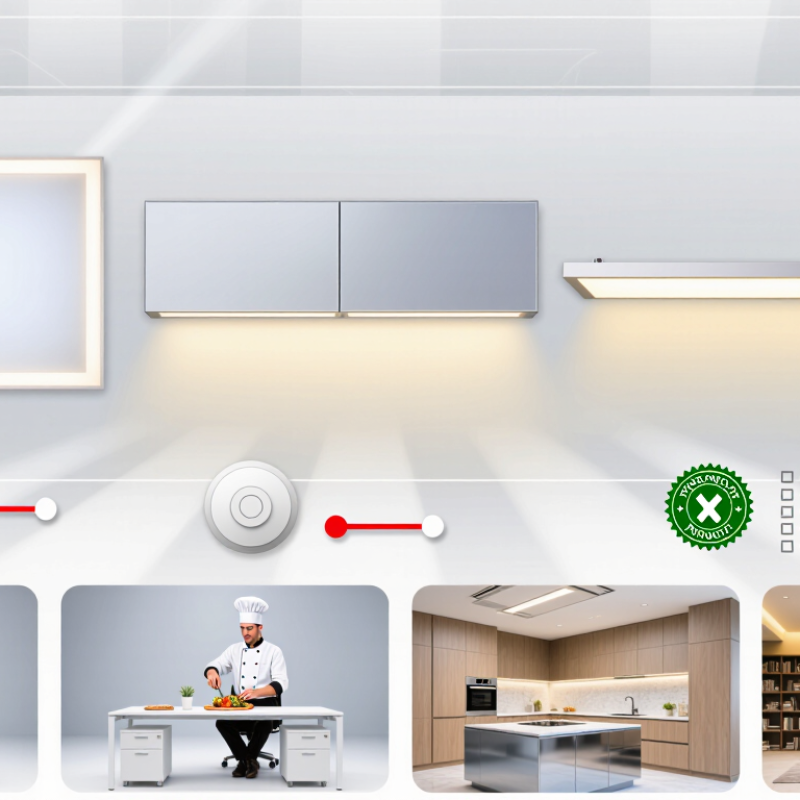
An LED panel light is a slim ceiling fixture that spreads light across a broad, even surface. Inside, its driver converts mains AC into regulated DC for LED chips mounted on a board. The chips emit blue light; a phosphor coating and diffuser blend it into softer white illumination. A good diffuser hides bright points, though a weak one can make colors look flat. No magic here.
Panel performance depends on more than wattage. Check lumens, efficacy, color rendering, color temperature, and flicker specifications. The U.S. Department of Energy estimated 569 terawatt-hours of annual U.S. energy savings by 2035. Its 2019 Energy Savings Forecast of Solid-State Lighting compares that outcome with a no-LED baseline. That projection covers general lighting, not panels alone. DOE’s Energy Saver guidance says LEDs can use up to 90% less energy than incandescent lamps, but that broad comparison is not a guarantee for every installation. Ceiling height and dark walls can change how bright a panel feels. A cool-white panel may look crisp above a desk, yet harsh over a dining table. I would compare real room samples before choosing; specifications do not tell the whole story.
What Is the Best LED Panel Light for 2026? — What an LED Panel Light Is and How It Works
The best LED panel light depends on the room, ceiling, visual-comfort needs, and controls. Use this guide to compare panel types and check the specifications that matter before choosing.
| Topic | How It Works or What to Look For | Practical Guidance |
|---|---|---|
| What an LED panel light is | A thin, broad-area luminaire that distributes light through a diffuser. It commonly contains LEDs, a driver, and optical components that spread light across the panel. | Often used for general lighting in offices, classrooms, healthcare spaces, and other areas with suspended or compatible ceilings. |
| How it produces light | Electrical current passes through LED semiconductor components, producing light. A driver regulates power, while the panel’s optical layers distribute the light. | The driver and optical design affect factors such as dimming compatibility, light distribution, and visual comfort. |
| Edge-lit design | LEDs are arranged around the panel’s edges; a light guide spreads their output across the face. | Can support a slim profile. Check for even illumination and any visible bright or dark areas. |
| Back-lit design | LEDs are positioned behind the diffuser, directing light forward through the panel. | Compare overall depth, light distribution, and stated performance; design details vary by product. |
| Light output | Measured in lumens (lm), which describe the total visible light emitted. | Choose output for the room’s size, ceiling height, task, and number of fixtures. Lumens are more useful than watts alone for comparing brightness. |
| Energy efficiency | Luminous efficacy is measured in lumens per watt (lm/W). | Compare lm/W among products with similar light output and color quality. Published performance can depend on configuration and operating conditions. |
| Color temperature | Correlated color temperature (CCT), measured in kelvins (K), describes whether light appears warmer or cooler. | Common choices include about 3000 K for warm white, 4000 K for neutral white, and 5000–6500 K for cooler white. Select according to the space and preference. |
| Color rendering | The color rendering index (CRI) indicates how accurately a light source renders colors compared with a reference source. | CRI 80 or higher is a common baseline for general lighting; consider CRI 90 or higher when color distinction is especially important. |
| Glare and visual comfort | Glare depends on brightness, viewing angle, room layout, and luminaire design. UGR is one method used to assess discomfort glare in indoor lighting. | For workspaces, check the lighting design and whether a UGR target, such as below 19, is appropriate for the application. A product rating alone does not determine room glare. |
| Dimming and controls | Dimming requires a compatible LED driver and control system. | Confirm the required dimming method—such as 0–10 V, DALI, or phase-cut—and verify compatibility with the installed controls before purchase. |
| Size and installation | Panels are made in multiple dimensions and installation formats, including recessed, surface-mounted, and suspended options. | Measure the ceiling opening and available depth, then confirm that the panel, frame, or suspension kit matches the ceiling type and local electrical requirements. |
| Driver and flicker | The driver converts incoming electrical power to the form needed by the LEDs. Driver performance can influence flicker and dimming behavior. | Look for documented flicker performance and dimming details, especially for video recording, sensitive tasks, or long periods of use. |
| Lifetime and warranty | LED lifetime figures are generally estimates based on specified test conditions and a defined measure of light-output maintenance. | Review the stated lifetime method, warranty terms, and coverage for both the panel and driver. A lifetime claim is not a guarantee that every unit will last for that duration. |
| Choosing the best fit | Balance light output, CCT, CRI, glare control, dimming, dimensions, efficiency, and documented support. | The best panel is the one that meets the room’s lighting needs, fits the ceiling, works with the controls, and has specifications and warranty terms suited to the application. |
Note: Specification ranges and lighting needs vary by application. Check the product documentation and consult a qualified lighting professional for project-specific design or installation requirements.
Related Posts
-
Who Are the Top LED Panel Light Manufacturers in China?
-
How to Choose the Best Light Panel for Your Business
-
Understanding the Benefits of Energy Efficient Led Panel Light for Modern Workspaces
-
What Is an LED Panel and How Does It Work?
-
Overcoming Common Issues with Best LED Ceiling Panels for Global Buyers
-
10 Reasons Why Best Led Panel Light is the Ultimate Choice for Global Buyers