10 Flood Light Buying Tips for Global Buyers
Choosing Flood Lights for international projects is rarely a simple brightness decision. A warehouse yard, sports court, coastal road, and farm entrance require different lighting approaches. Beam angle, mounting height, glare control, color temperature, and operating hours can change the result dramatically.
Lighting engineer Ian Ashdown has emphasized, “More light is not necessarily better light.” That principle deserves attention. Excessive brightness can create glare, dark shadows, wasted energy, and uncomfortable views for drivers or nearby residents. A useful buying decision begins with the site, not the product photograph.
This guide, “10 Flood Light Buying Tips for Global Buyers,” examines practical details that affect long-term performance. It considers lumen output, optical distribution, IP and IK ratings, surge protection, thermal management, controls, warranty terms, and replacement access. Buyers should also confirm voltage, frequency, plug requirements, and regional compliance before placing an order. Small details matter.
Ask for photometric files.
Request samples when possible. A beam that looks wide online may leave dark zones across a loading area. A cool-white fixture may appear harsh beside warmer architectural lighting. These judgments are partly technical and partly personal. This guide is not infallible, either. Project conditions vary, and even experienced buyers can overlook installation height or maintenance costs. Careful measurement, supplier verification, and honest comparison remain essential for dependable Flood Lights.
Define Flood Light Types and Their Intended Applications
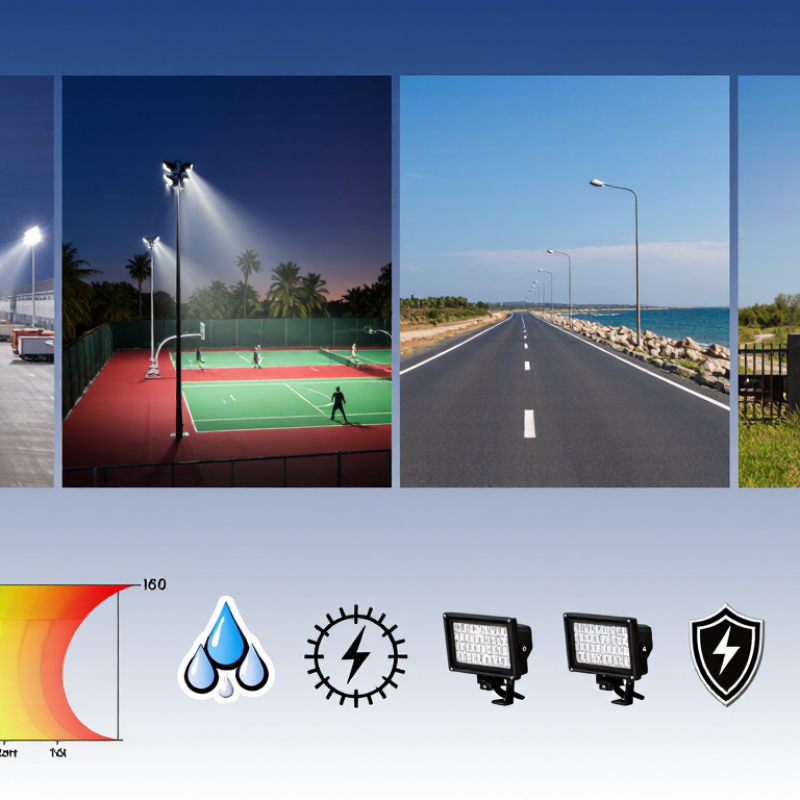
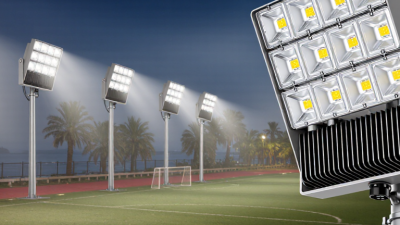
Before comparing price or wattage, define the flood light’s job. A wide-beam outdoor flood light spreads illumination across driveways, yards, and building walls. A narrow-beam model reaches loading areas, tall façades, or distant signs. LED flood lights generally reduce energy use and maintenance, but performance depends on optics, heat control, and installation. For sports grounds, choose high-output fixtures with controlled glare and stable color rendering. For security lighting, motion sensing can reduce operating hours, although poor aiming may disturb neighbors or leave blind zones. This is where many buying decisions fail.
Check the environment before selecting a housing. Wet locations need verified ingress protection, while coastal sites need corrosion-resistant materials. Construction sites may require rugged housings and protected cable entries. A portable flood light suits temporary work, but a fixed unit is better for permanent access roads. Symmetrical beams work well for open areas; asymmetrical beams can wash a wall more evenly. Match color temperature to the task. Neutral white often supports clear visibility without feeling excessively harsh. Global buyers should verify voltage, mounting height, dimming compatibility, and local electrical requirements. Specifications can look convincing. Field conditions are less forgiving. Test one fixture at night before ordering hundreds. Beam spread, shadowing, and glare often differ from catalog drawings.
Flood Light Types and Their Intended Applications
Typical reference output levels by application. Actual selection should be verified with a photometric file, mounting height, beam angle, and required illuminance.
Lower-output flood lights are commonly used for pathways, entrances, and residential security. Medium-output models suit façades, loading areas, and small commercial spaces, while high-output and area flood lights are intended for warehouses, sports grounds, yards, and large outdoor zones. Beam angle, mounting height, glare control, IP rating, and local electrical requirements should be considered alongside lumen output.
Compare Brightness, Beam Angle, and Color Temperature
When comparing flood lights, start with lumens, not watts. Lumens show total light output; watts only show energy use. The U.S. Department of Energy’s Solid-State Lighting reports note that laboratory LED efficacy can exceed 200 lumens per watt, while real products perform lower. Therefore, compare tested lumens and lumens per watt together. A 10,000-lumen fixture may look weak if its beam spreads across a wide yard.
Tip: Match brightness to the task. A narrow beam suits gates or tall walls. A wide beam suits parking areas and building façades. Beam angle changes perceived brightness dramatically. For example, the same output concentrated at 30 degrees appears more intense than at 120 degrees. Check the manufacturer’s photometric file, preferably tested under IES LM-79 procedures. I have seen buyers trust wattage alone, which is an easy mistake.
Color temperature affects comfort and visibility. Around 2700–3000K gives warmer light for homes and hospitality spaces. Around 4000K often supports clearer work areas. Higher temperatures can appear harsh, especially near residences. The International Commission on Illumination identifies correlated color temperature as a visual descriptor, not a complete quality measure. Color rendering still matters. Look for a stated CRI, not just “daylight.”
Tip: Compare beam pattern, glare control, and mounting height together. A brighter fixture is not always better. My own preference is to choose slightly lower brightness when spill light may disturb neighbors. Product claims can also vary, so independent test reports deserve more trust than attractive packaging.
Check Energy Efficiency, Lifespan, and Power Requirements
10 Flood Light Buying Tips for Global Buyers
When choosing a flood light, energy efficiency should guide the decision, not only the purchase price. Check lumens, watts, and lumens per watt on the specification sheet. Higher efficacy usually means more light with less electricity. However, measured output can differ from marketing figures. Request independent test data when possible. A 100-watt fixture may not deliver the same brightness across different designs.
Lifespan needs careful interpretation. Look for an L70 rating, which indicates when light output may fall to 70 percent. Heat, moisture, dust, and frequent switching can shorten real service life. Inspect the operating temperature range and ingress protection rating. A ten-year claim sounds impressive. It may depend on ideal conditions. In hot warehouses or coastal areas, performance can decline sooner. That uncomfortable detail matters.
Power requirements also vary between markets. Confirm voltage, frequency, current, and wiring methods before ordering. Some fixtures tolerate a wide voltage range, while others need stable input power. Check whether a driver is included and review its surge protection rating. Poor power quality can damage lighting equipment quickly. I once focused too heavily on wattage and missed the starting current. That mistake caused unnecessary installation changes. Ask for full electrical data, local compliance documents, and clear warranty terms before approving the shipment.
Evaluate Weather Resistance, Safety Standards, and Certifications
When buying flood lights globally, weather resistance deserves more than a high IP number. Check whether the enclosure can resist rain, dust, humidity, and temporary water exposure. An IP65 rating may suit many outdoor areas, but it does not prove resistance to impact, salt air, or freezing temperatures. Look beyond the label. Ask for evidence.
Review the product’s operating temperature, cable sealing, drainage design, and corrosion protection. In coastal locations, ordinary metal housing can deteriorate faster than expected. An IK impact rating also matters near warehouses, sports grounds, and public walkways. I once inspected lights that passed basic rain testing but showed rust around their mounting screws. Small details can shorten service life.
Safety standards and certifications require equal attention. Confirm that testing covers the exact model, not merely a similar product family. Request current certificates, laboratory reports, and electrical safety declarations. Check voltage, grounding, surge protection, and installation instructions for the destination market. Certification marks can be misunderstood when documents are incomplete. Ask for evidence. An independent laboratory report offers stronger confidence than a sales statement.
Requirements differ across countries and project types, so local verification remains necessary. A qualified electrician should assess wiring, mounting strength, and emergency access before installation. My checklist is useful, but it is not perfect. Recheck assumptions when climate, voltage, or installation height changes. A safer purchase begins with traceable evidence, realistic conditions, and clear responsibility.
10 Flood Light Buying Tips for Global Buyers - Evaluate Weather Resistance, Safety Standards, and Certifications
A practical comparison guide for selecting outdoor LED flood lights across different climates, installation conditions, and international markets.
| Tip | Buying Dimension | What to Check | Practical Benchmark or Requirement | Why It Matters | Useful Evidence |
|---|---|---|---|---|---|
| 1 | Ingress Protection | Confirm the IP rating for the complete luminaire, including the enclosure, lens, cable entry, and junction area. | IP65 protects against dust and water jets; IP66 provides stronger protection against powerful water jets. Use IP67 only when temporary immersion is expected and the product is specifically tested for it. | Prevents dust, rain, and water jets from reaching electrical parts and reducing service life. | Product datasheet, test report, and marking on the product or packaging. |
| 2 | Impact Resistance | Review the IK rating of the housing and diffuser, particularly for parking areas, public spaces, sports grounds, and industrial sites. | IK08 withstands an impact energy of 5 joules; IK10 withstands 20 joules under the applicable test method. | Reduces the risk of damage from accidental impact, vandalism, tools, or flying debris. | Declared IK code and independent test documentation based on IEC 62262. |
| 3 | Operating Temperature | Match the specified ambient-temperature range with the destination climate and installation location. | Many outdoor LED flood lights are specified around −20°C to +45°C; cold-storage, desert, or high-heat applications may require a wider range. | Extreme temperatures affect LED output, driver reliability, battery performance, and component aging. | Manufacturer temperature rating, thermal test report, and installation instructions. |
| 4 | Corrosion Resistance | Check housing material, coating system, fasteners, and suitability for coastal or chemically aggressive environments. | For marine or high-humidity locations, prefer corrosion-resistant aluminum, stainless-steel fasteners, sealed cable glands, and a coating validated by a relevant corrosion test. Salt-spray hours should not be treated as the only measure of real-world durability. | Salt, humidity, pollutants, and chemicals can corrode the housing, mounting bracket, and electrical connections. | Material specification, coating report, corrosion-test method, and maintenance instructions. |
| 5 | Electrical Safety | Verify input voltage, frequency, grounding or double-insulation design, surge protection, and driver safety features. | Confirm compatibility with the local supply, such as 100–277 V AC or 220–240 V AC. For exposed outdoor installations, a surge protection rating of 6 kV or higher is commonly considered, subject to the site risk assessment. | Reduces risks from overvoltage, lightning transients, electric shock, overheating, and nuisance failures. | Electrical test report, wiring diagram, driver specifications, and installation manual. |
| 6 | Photometric Performance | Compare delivered lumens, beam angle, color temperature, color rendering, and glare control rather than relying only on wattage. | Typical outdoor choices include 3,000–6,500 K color temperature, CRI ≥80 for general applications, and narrow, medium, or wide beams selected according to mounting height and target area. | Correct optical performance improves uniformity, visibility, energy efficiency, and visual comfort. | LM-79-style photometric report, IES/LDT file, lumen-maintenance data, and glare-control information. |
| 7 | Energy Efficiency and Controls | Evaluate system efficacy, dimming compatibility, photocell or motion-control options, and standby consumption. | Compare delivered lumens per watt at the complete-fixture level. A practical modern outdoor benchmark is often around 100–160 lm/W, but the tested value should include the driver and optical system. | Higher system efficacy can lower electricity costs while controls reduce unnecessary operating hours. | Verified performance data, control protocol details, dimming range, and energy-label documentation where required. |
| 8 | Certifications and Market Access | Identify the legal and technical requirements of the destination country before placing an order. | Common requirements may include CE for applicable European-market legislation, UKCA for applicable Great Britain requirements, and FCC rules for relevant U.S. radio-frequency emissions. Certification needs vary by product type and market. | Correct conformity documentation supports customs clearance, installation approval, insurance, and legal sale. | Declaration of conformity, test reports, certification numbers, and market-specific technical files. |
| 9 | Lifetime and Warranty Conditions | Review rated life, lumen-maintenance percentage, driver life, switching cycles, and the conditions attached to the warranty. | A common LED lifetime claim is 50,000 hours, but it should be linked to a stated ambient temperature and lumen-maintenance target such as L70. Confirm whether the warranty covers the driver, housing, optics, and labor. | Lifecycle cost depends on maintained light output and replacement frequency, not only the initial purchase price. | LM-80/TM-21-related evidence where applicable, warranty terms, failure-rate data, and spare-parts policy. |
| 10 | Installation and Maintenance | Check mounting adjustment, cable entry, terminal access, cleaning requirements, replacement parts, and installation clearances. | Choose a bracket that supports the required tilt and load. Confirm the fixture weight, wind-load information, cable-gland size, torque values, and whether the light can be serviced without compromising the IP seal. | Proper installation improves aiming accuracy, safety, weather resistance, and long-term maintenance costs. | Installation manual, mounting template, torque specifications, spare-parts list, and site-specific structural review. |
Buyer note: Ratings and certifications should be verified for the exact model, configuration, voltage, and destination market. IP and IK codes describe tested protection levels; they do not replace correct installation, sealing, grounding, or routine inspection.
Assess Installation Needs, Warranty Coverage, and Total Cost
10 Flood Light Buying Tips for Global Buyers
Assess Installation Needs, Warranty Coverage, and Total Cost
A flood light should fit the site before it fits the budget. Measure mounting height, beam angle, cable length, voltage, and access for maintenance. Check IP and impact ratings for rain, dust, coastal air, or warehouse conditions. A photometric file can reveal dark zones before installation. Measure twice.
Installation labor often exceeds the visible product price. Confirm whether brackets, surge protection, connectors, lifting equipment, and local electrical inspections are included. Requirements also vary by country. A technically efficient light may still create delays if its voltage or certification does not match the project.
Warranty language deserves careful reading. Confirm coverage for the housing, LED modules, driver, controls, and labor. Ask who pays freight and removal costs when a unit fails. The U.S. Department of Energy reports that LED products use at least 75% less energy and can last up to 25 times longer than incandescent lighting. However, flood light performance depends on heat, power quality, operating hours, and installation. The number is not a promise.
Calculate total cost over the expected service period. Include purchase price, electricity, maintenance visits, replacement parts, downtime, and disposal. A longer warranty may reduce risk, but only if its exclusions are practical. I have seen low-cost selections become expensive after repeated access work. That assumption needs review. Compare real operating data, not only catalog claims.
Cite: U.S. Department of Energy, Energy Saver, “LED Lightbulbs.”
Related Posts
-
Innovative Flood Lights Transforming Outdoor Spaces with Enhanced Safety and Efficiency
-
Essential Flood Lights Checklist for Your Next Outdoor Event
-

Top Strategies for Sourcing the Best Industrial Flood Lights Globally
-
Challenges Faced by Global Buyers in Sourcing Floodlight Led Products
-
What Are the Top LED Floodlights for Global Buyers?
-
How to Choose the Right Exit Lights for Your Business Safety Needs