

How to Choose Emergency Exit Lights?
Choosing Emergency Exit Lights is not just a matter of picking a bright sign. The right fixture must stay visible, guide people toward a safe route, and operate when normal power fails. Picture a dim corridor, a door partly hidden by shelving, or a stairwell where smoke could reduce visibility. In these places, clear direction matters. Small details matter.
Start by considering the building’s layout, occupancy, and lighting conditions. A compact office corridor may need a different solution from a warehouse with high ceilings and long aisles. Check viewing distance, sign size, mounting position, and whether directional arrows match the actual escape route. A well-lit sign pointing the wrong way is still a problem. It sounds obvious, but it can be missed during a quick purchase.
Review the unit’s power source, backup duration, test features, and maintenance needs. Battery-backed models can provide light during an outage, but batteries age and require inspection. LED options often use less energy and can reduce relamping work, though performance and product quality vary. Compare specifications, not just price. Confirm that each product suits the site and applicable local requirements, and ask a qualified fire-safety professional when details are unclear. The guidance in this article will help you weigh visibility, reliability, installation, and upkeep. There is no single best fixture for every building. A careful choice begins with the route people will actually follow.

Understand the Purpose and Safety Requirements of Emergency Exit Lights
How to Choose Emergency Exit Lights?
Understand the Purpose and Safety Requirements of Emergency Exit Lights
Emergency exit lights are not decoration. They identify the route and keep stairs, corridors, and door thresholds visible when normal power fails. Exit signs guide people toward safety; emergency luminaires light the path beneath them. Both functions matter. Darkness comes fast. NFPA’s Fire Loss in the United States During 2023 estimated 1.39 million fires reported by U.S. fire departments. That figure does not measure lighting failures, but it shows why evacuation systems must be dependable.
Check requirements for your building and local code adoption before choosing equipment. NFPA 101’s 2024 edition specifies emergency illumination averaging at least 1 foot-candle initially, with a 0.1-foot-candle minimum, and operation for 90 minutes. Requirements can differ by occupancy and adopted edition. Look for listed equipment suitable for the location, backup power, readable signs, and a practical testing plan. During a walk-through, check sightlines from corners and stair landings; a sign hidden by an open door helps nobody. A plan can look compliant on paper, yet a dark corner can tell another story. I’d also verify that replacement batteries and test records are easy to manage.
How to Choose Emergency Exit Lights? - Understand the Purpose and Safety Requirements of Emergency Exit Lights
| Selection factor | Purpose or safety consideration | What to choose or verify |
|---|---|---|
| Exit sign vs. emergency lighting | An exit sign identifies the route or door to an exit. Emergency lighting illuminates paths, stairs, and changes in level when normal power fails. | Determine whether the location needs a sign, path lighting, or both. A sign alone does not necessarily provide enough light for safe movement. |
| Location and visibility | People must be able to identify exits and follow the egress route, including at turns, intersections, and areas where the exit is not immediately visible. | Map the entire route and check sightlines from normal approach directions. Use directional indicators where needed, following local code and approved plans. |
| Emergency operating duration | Emergency equipment must remain available long enough to support evacuation during a power interruption. | Many U.S. building and life-safety codes commonly require emergency operation for at least 90 minutes. Confirm the duration required by the applicable local code. |
| Power arrangement | A power failure must not leave required signs or egress lighting without illumination. | Select a listed unit with an integral battery, or connect the equipment to an approved emergency power system. Check compatibility with the building’s power design. |
| Illumination and coverage | Emergency lighting should help occupants see the egress path and potential hazards when normal lighting is unavailable. | Assess mounting height, spacing, shadows, stairs, and route geometry. Verify illumination against the applicable code rather than relying only on a fixture’s stated output. |
| Environment and construction | Dust, moisture, temperature, impact, and corrosive conditions can affect equipment performance and service life. | Choose an enclosure and temperature rating suited to the installation area. Use equipment approved for damp, wet, or hazardous locations where required. |
| Testing and maintenance | A unit that is not tested or maintained may fail during an outage even if it appears intact. | Provide accessible test controls or self-test features where appropriate. Keep inspection records and follow the equipment instructions and local testing requirements. |
| Code approval and installation | Rules for sign placement, lettering, illumination, power, and testing vary by jurisdiction and building use. | Confirm product listing, installation details, and design with the local authority having jurisdiction and a qualified electrical or fire-protection professional. |
Note: Requirements vary by jurisdiction, occupancy, and building design. Use applicable local codes and approved plans for final selection and installation.
Related Posts
-
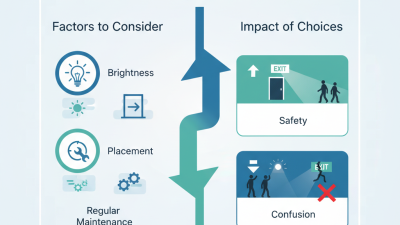
How to Choose the Right Emergency Exit Lights for Your Building?
-
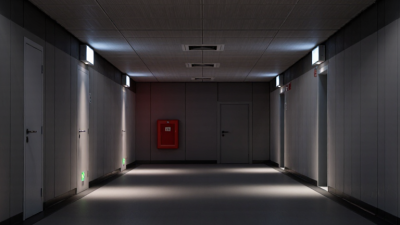
2026 How to Choose Commercial Emergency Lights?
-

What are the Benefits of Using Led Emergency Lights in Your Facility
-
Essential Tips for Sourcing Reliable Emergency Exit Light Manufacturers Globally
-

How to Choose the Right Exit Lights for Your Business Safety Needs
-
2026 Top Exit Lights Buying Guide for Global Shoppers?