Why Are LED Lights Better for Global Buyers?
For global buyers, the Led Light is more than a bright replacement for traditional lamps. It can reduce energy demand, maintenance work, and long-term operating costs. The U.S. Department of Energy reports that LED products use at least 75% less energy than incandescent lighting. They can also last up to 25 times longer. That difference becomes tangible in warehouses, hotels, and retail stores. Fewer ladder visits are needed. Fewer replacement cartons cross borders.
The International Energy Agency’s Energy Efficiency 2023 report identifies efficient lighting as an important energy-saving opportunity worldwide. This matters when electricity prices, carbon targets, and supply-chain costs continue changing. However, a responsible buyer should examine more than wattage. Check lumen output, color rendering, beam angle, thermal design, warranty terms, and regional safety certification. A 12-watt lamp is not automatically better than every 10-watt lamp. Product quality varies.
The case is strong, but not automatic. Poor drivers may flicker. Weak heat management can shorten service life. Packaging and recycling also deserve attention. The European Commission’s ecodesign and energy-labeling framework shows how performance information can support clearer purchasing decisions. Buyers should request test reports, photometric files, and documented compliance from established manufacturers. Real projects reveal the truth. A bright showroom sample may perform differently in a dusty factory or a cold outdoor site. Even the best data needs context. That distinction matters for reliable global sourcing.

LED Lighting: Definition, Main Types, and Core Technologies
LED lighting uses light-emitting diodes to convert electrical energy into visible light. Unlike traditional lamps, LEDs produce light through semiconductor materials, not heated filaments. They usually consume less electricity and can operate for many years when heat is managed properly. LEDs are not automatically better. Poor drivers, weak cooling, or inaccurate specifications can reduce their value.
Common LED types include replacement bulbs, panel lights, strip lights, high-bay fixtures, floodlights, and street lamps. Each type serves a different space. Panels suit offices with even ceilings, while high-bay fixtures work better in warehouses with tall roofs. Strip lights add flexible accent illumination.
Buyers should check lumen output, beam angle, color temperature, and color rendering index. A warm 3000K lamp feels comfortable in a hotel. A cooler 5000K light may suit a workshop.
Core technologies include SMD and COB LED packages, constant-current drivers, thermal heat sinks, and smart control systems. Quality drivers help prevent flicker and unstable performance. Heat sinks move heat away from the diode. It is easy to overlook this detail. Global buyers should also confirm input voltage, frequency, dimming compatibility, ingress protection, and required safety documentation. Photometric files can reveal whether a fixture truly matches the project.
In practice, installation conditions often matter as much as the advertised efficiency. A technically strong product can still perform poorly in a hot, dusty, or poorly ventilated location.
Energy Efficiency and Long-Term Cost Savings for Global Buyers
Why Are LED Lights Better for Global Buyers?
Energy Efficiency and Long-Term Cost Savings for Global Buyers
For global buyers, LED lighting can reduce operating costs across warehouses, offices, hotels, and public facilities. The U.S. Department of Energy reports that LED products use at least 75% less energy than incandescent lighting. They can also last up to 25 times longer. That difference matters where electricity prices and labor costs keep changing.
Energy savings begin immediately. A 10-watt LED can replace a 60-watt incandescent lamp while producing similar useful light. Over thousands of operating hours, the lower load reduces utility expenses and cooling demand. The International Energy Agency’s Energy Efficiency 2023 report identifies efficient lighting as a practical route for lowering electricity consumption. However, payback is not automatic. Poor heat management, weak drivers, or incorrect voltage can shorten service life. A cheaper purchase may become expensive.
Tips: Compare lumens, watts, rated life, color temperature, and warranty terms. Check voltage compatibility before ordering internationally. Request photometric files for large projects. Test a small batch first. Small tests prevent large mistakes.
Buyers should calculate total cost of ownership, not only unit price. Include shipping, installation, replacements, maintenance, and expected energy use. The U.S. DOE also notes that LEDs produce less waste heat than traditional sources. This can support savings in air-conditioned spaces, although actual results depend on climate and building design. Even professional estimates need review; operating schedules are often assumed, not measured.
Product Lifespan, Reliability, and Maintenance Requirements
Why Are LED Lights Better for Global Buyers?
For global buyers, product lifespan matters more than a bright showroom sample. Quality LED lights can operate for many years when their heat control, driver, and housing are properly designed. A listed lifespan of 50,000 hours is useful, but it is not a guarantee under every condition. High temperatures, unstable voltage, dust, and frequent switching can shorten service life. That matters.
Reliability depends on more than the LED chip. Buyers should check thermal testing, input-voltage range, ingress protection, and documented quality inspections. In humid warehouses, sealed housings can reduce moisture damage. In hot workshops, strong heat dissipation may prevent early brightness loss. Small details matter. A light that flickers after several months may still turn on, yet it has already failed its practical purpose.
Maintenance is usually simpler because LED systems need fewer lamp replacements and generate less heat than many older lighting options. Cleaning remains necessary, especially where dust covers the lens or blocks ventilation paths. Maintenance teams should inspect connections, drivers, and mounting points during scheduled checks. Some suppliers focus heavily on lifespan figures and overlook replacement access. That is a weakness worth questioning. Buyers should request test conditions, warranty terms, spare-part availability, and clear installation guidance before placing large international orders.
Environmental Benefits and Compliance with International Standards
LED lighting matters to global buyers because efficiency affects both emissions and operating costs. The International Energy Agency reports that lighting uses about 15% of global electricity and produces roughly 5% of global greenhouse-gas emissions. LEDs can reduce electricity demand substantially. The U.S. Department of Energy reports that LED products use at least 75% less energy than incandescent lamps and can last up to 25 times longer. These figures support environmental claims, but actual savings depend on wattage, operating hours, heat, and control systems.
Compliance requires more than a low-wattage label. Buyers should request test evidence against IEC 62560 for self-ballasted lamps or IEC 60598 for luminaires. IEC 62471 also helps assess photobiological safety, while CISPR 15 addresses electromagnetic compatibility. For restricted substances, suppliers should provide current RoHS evidence and material declarations. Energy labels, recycling information, and factory quality records improve traceability. However, standards do not automatically prove responsible manufacturing. Supply-chain audits and product-level documentation still matter.
Tips: Check rated life, lumen maintenance, power factor, and warranty terms. Ask for independent laboratory reports. Compare delivered lumens, not only watts. A product may claim “eco-friendly” while using difficult-to-recycle components. That gap deserves attention.
Why Are LED Lights Better for Global Buyers? - Environmental Benefits and Compliance with International Standards
| Evaluation Dimension | Verified Data or Requirement | Environmental or Compliance Benefit | Practical Consideration for Global Buyers |
|---|---|---|---|
| Energy consumption | Residential LED lighting uses at least 75% less energy than incandescent lighting for comparable general illumination. | Lower electricity demand reduces operating costs and indirect greenhouse-gas emissions from power generation. | Compare products by delivered lumens and lumens per watt rather than wattage alone. Source: U.S. Department of Energy. |
| Service life | LED bulbs can last up to 25 times longer than traditional incandescent bulbs, depending on product design and operating conditions. | Longer replacement intervals can reduce material consumption, packaging waste, transport, and maintenance activity. | Request rated life, warranty conditions, switching-cycle data, and the applicable test standard before comparing suppliers. |
| Illustrative annual energy saving | Replacing one 60 W incandescent bulb with one 10 W LED used for 4 hours per day saves approximately 73 kWh per year: (60 − 10) W × 4 h × 365 days. | At an electricity-emission factor of 0.40 kg CO₂e/kWh, the illustrative saving equals approximately 29.2 kg CO₂e per lamp per year. | Actual carbon savings vary by grid mix, operating hours, light output, and product efficiency. Use local electricity factors for procurement calculations. |
| Hazardous substances | LED lamps generally do not use mercury as a light-producing substance, unlike fluorescent and compact fluorescent lamps. Electronic components may still contain regulated substances. | The absence of mercury in the light source simplifies end-of-life handling and reduces the risk associated with mercury-containing lamps. | Request a material declaration and a valid RoHS compliance statement for the complete product, including the driver and circuit board. |
| Restriction of hazardous substances | EU RoHS Directive 2011/65/EU, as amended, restricts ten substance categories, including lead, mercury, cadmium, hexavalent chromium, PBB, PBDE, and four phthalates. | Helps limit hazardous substances in electrical and electronic equipment placed on the EU market. | Check the product scope, applicable exemptions, technical file, test reports, and declaration of conformity rather than relying only on a logo. |
| Electrical and luminaire safety | IEC 60598-1 specifies general requirements and tests for luminaires, including construction, marking, protection against electric shock, and thermal safety. | A recognized safety framework supports consistent product evaluation across many international markets. | Select the relevant luminaire part standard in addition to IEC 60598-1 and confirm the required national certification route. |
| Photobiological safety | IEC 62471 evaluates photobiological safety risks from optical radiation, including ultraviolet, visible, and infrared emissions. | Provides a method for assessing potential eye and skin exposure risks from lighting products. | Request the photobiological-risk-group assessment, especially for high-power, directional, industrial, or specialized LED products. |
| Energy efficiency and product information | EU Ecodesign Regulation (EU) 2019/2020 establishes energy-efficiency and information requirements for light sources and separate control gears. EU Energy Labelling Regulation (EU) 2019/2015 uses an A–G scale. | Encourages efficient products and gives buyers standardized information for market comparison. | Verify luminous flux, power, color rendering, color temperature, lifetime, and energy-class information on technical documents and packaging. |
| End-of-life management | The EU WEEE Directive 2012/19/EU requires arrangements for the separate collection and appropriate treatment of waste electrical and electronic equipment. | Supports recycling, resource recovery, and reduced disposal of electrical products with general waste. | Confirm producer-registration, take-back, labeling, and recycling obligations in each destination market before shipment. |
| Product documentation | Common international procurement documentation includes datasheets, test reports, declarations of conformity, technical files, material declarations, and installation instructions. | Traceable documentation improves regulatory confidence and reduces the risk of non-compliant imports or product returns. | Match every document to the exact model, rated input, driver, market, and revision date; avoid using generic reports for different products. |
Note: Performance figures are general reference values. Actual results depend on product quality, application, operating hours, ambient temperature, electricity mix, and local regulatory requirements.
How to Evaluate LED Lights for Different Markets and Applications
Why Are LED Lights Better for Global Buyers?
Evaluating LED lights across markets requires more than comparing wattage and price. The International Energy Agency reports that lighting represents about 15% of global electricity use, making efficiency a major purchasing factor. Check delivered lumens, not advertised watts. A 100 lm/W product may look attractive, but heat, optics, and aging can reduce real output. Request photometric files, laboratory test reports, and lumen-maintenance data.
Market conditions change the checklist. Confirm voltage, frequency, dimming compatibility, power factor, and local safety certification before ordering. For humid warehouses, an appropriate IP rating matters. For retail displays, high color-rendering performance can protect product appearance. Offices may need low flicker and controlled glare. The U.S. Department of Energy’s solid-state lighting reports show that LED efficacy continues to improve, but application design still determines actual energy savings. Higher efficacy alone is not enough.
I examine samples under real conditions. Not just in a showroom. I check startup behavior, heat around the driver, color consistency, and visible flicker through a phone camera. That test is imperfect. Phone cameras are not laboratory instruments. Buyers should also compare warranty terms, replacement availability, packaging strength, and regional installation practices. The International Commission on Illumination emphasizes measurement consistency, yet suppliers may still present results from different test conditions. Ask for the test temperature, measuring distance, and operating hours. A cheaper unit can become expensive when failures, returns, or incompatible controls disrupt a project.
Related Posts
-
Global Market Insights for Led Bulbs in 2025 Navigating Trends and Opportunities
-

What Are the Benefits of Using LED Light Street Solutions for Urban Development
-
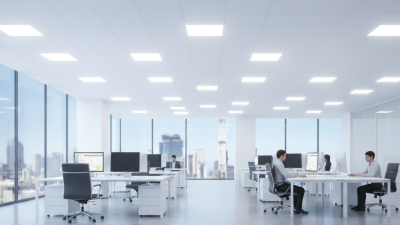
Best Led Panel Light for Brightening Your Space?
-
Navigating the LED Bulb Market How to Identify Reliable Manufacturers for Your Procurement Needs
-
Discover the Future of Urban Lighting at the 137th Canton Fair: Commercial LED Street Lights in Focus
-
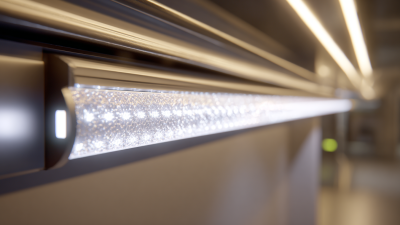
The Future of Smart LED Exit Lights Innovations and Sustainability