Top Hydraulic Crawler Drill Manufacturers for Global Buyers
Choosing a Hydraulic Crawler Drill is a practical decision, not just a comparison of brochures. Global buyers need equipment that suits the ground, drilling method, and daily workload. A machine working on a remote quarry bench faces different demands from one used on a compact construction site. Details matter.
This guide introduces manufacturers and the factors buyers can use to assess them. Key points include drilling capacity, mast configuration, crawler stability, power requirements, and access to service parts. A specification sheet may list impressive output, but real productivity also depends on operator experience, maintenance intervals, and the conditions at the jobsite. Ask suppliers for model-specific documentation and clear answers about warranty coverage, spare-part availability, and technical support. Claims are worth checking.
Manufacturer suitability can vary by region. Transport access, local service networks, and the availability of trained technicians may influence ownership costs as much as the purchase price. Product ranges and support arrangements also change, so confirm current details directly with each supplier before making a decision. No single brand fits every project. A lower-cost model may meet straightforward drilling needs, while demanding work can call for greater capacity and stronger after-sales support. Even careful comparisons leave some uncertainty: ground conditions can change, and published performance figures cannot predict every site. Treat this overview as a starting point, then match verified specifications to the work your crew actually performs.
Hydraulic Crawler Drills: Operating Principles, Main Components, and Uses
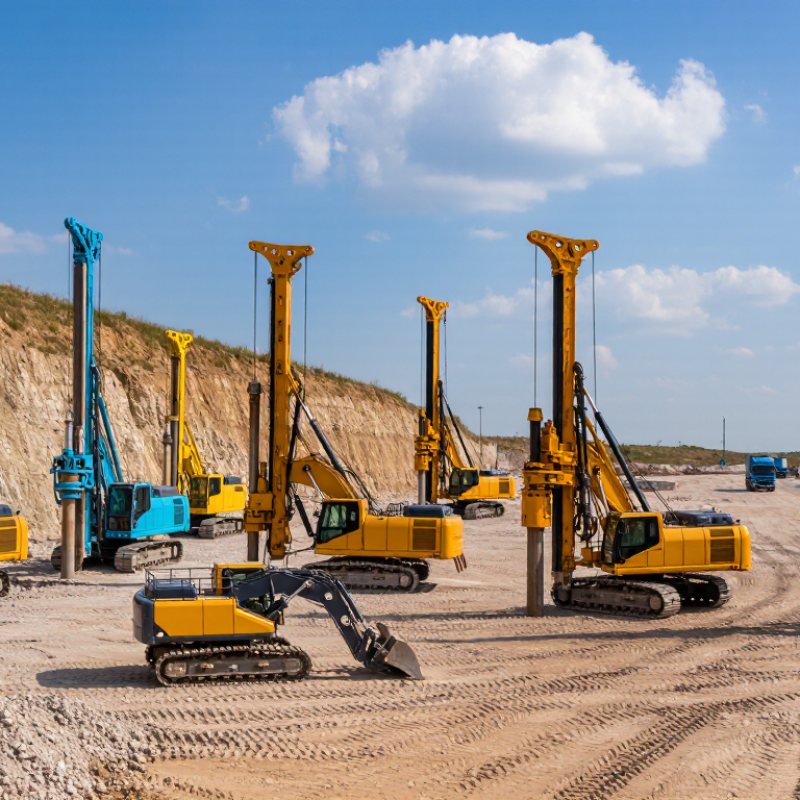
Hydraulic crawler drills turn engine power into controlled drilling force. A hydraulic pump sends oil through valves to the rotation motor, feed system, and, on some models, the impact mechanism. The mast guides the drill string, while the crawler undercarriage positions the rig on uneven ground. Depending on the tool configuration, flushing may use water or compressed air to clear cuttings. Operators use these rigs for quarrying, mineral exploration, foundation work, and slope stabilization.
Scale helps explain their role in mining. The USGS Mineral Commodity Summaries 2024 estimated global copper mine production at 22 million metric tons in 2023. That figure is not a drill-performance measure, but it reflects the scale of extraction activity where exploration drilling supports decisions. In practice, geology, hole diameter, and required depth shape equipment choice more than headline engine power. A powerful rig can still struggle on fractured rock. The neat diagram misses mud, vibration, and changing ground conditions.
Tips: Check hose connections and track position before drilling. Match the bit and flushing method to the formation, and monitor dust control. Small details matter. Record feed pressure and penetration changes; they can reveal worn tooling or shifting rock before the hole drifts off line.
Classify Top-Hammer and DTH Rigs by 90–165 mm Hole Diameter
Hydraulic crawler drills for 90–165 mm holes generally fall into two groups: top-hammer and down-the-hole (DTH) rigs. Top-hammer models transmit impact through the drill string, making them a practical option for smaller holes, often around 90–127 mm. They can offer quick setup and efficient drilling in competent, relatively uniform rock. DTH rigs deliver impact near the bit and are commonly considered for larger holes, roughly 115–165 mm, or deeper holes where straighter drilling is important. These ranges overlap; they are useful guides, not fixed rules.
For global buyers, compare more than the advertised diameter. Check the rig’s feed force, available hammer sizes, compressor requirements, rod handling, and crawler stability on the actual worksite. Fractured rock, wet cuttings, and tight access can change the best fit. A rig that suits a clean quarry bench may struggle on uneven ground. Specifications also vary by configuration, so confirm the proposed setup with the manufacturer and request performance data for similar rock conditions.
Tips: Match the bit and flushing capacity to the target hole and geology. Ask for a trial plan or field references, and verify transport dimensions before ordering. Small details matter. I would still treat any diameter-based shortlist as provisional until site conditions are checked.
| Nominal Hole Diameter | Drilling Method | How the Impact Is Delivered | Typical Applications | Key Selection Considerations |
|---|---|---|---|---|
| 90–110 mm | Top-hammer | A hydraulic percussion hammer at the surface transfers impact through the drill string to the bit. | Bench and production drilling, construction work, and other relatively small-diameter rock holes. | Check feed force, rod handling, hole alignment, and the availability of compatible rods and bits. Rod-string deflection can affect accuracy as hole depth increases. |
| 90–110 mm | DTH (down-the-hole) | A pneumatic hammer operates near the bit; compressed air powers the hammer and helps clear cuttings from the hole. | Rock drilling where consistent hole diameter or accuracy at greater depth is important, subject to compressor and ground conditions. | Match compressor pressure and air delivery to the selected hammer and operating conditions; consider noise, dust control, and air supply requirements. |
| 110–140 mm | Top-hammer | Surface percussion is transmitted through the rods; the rig’s hammer, feed system, and tooling must be configured for the required hole size. | Production and construction holes in suitable rock, including applications where a top-hammer setup meets depth and accuracy requirements. | Verify the manufacturer’s rated diameter range and the intended hole depth. Larger or deeper holes can increase sensitivity to rod-string behavior and ground conditions. |
| 110–140 mm | DTH (down-the-hole) | The hammer works close to the bit, reducing the distance over which impact energy must travel through the drill string. | Quarry, mining, and construction drilling in rock; often considered for deeper holes or when hole straightness is a priority. | Assess compressor capacity, hammer and bit compatibility, water management, and the required dust-suppression system. |
| 140–165 mm | Top-hammer | A surface-mounted hydraulic hammer delivers impact through the drill string; suitability depends on the rig’s engineered limits and tooling. | Specialized larger-hole applications where a top-hammer rig is specifically rated for the required diameter, depth, and rock conditions. | Confirm rated hole diameter, available tooling, hole-depth capability, and accuracy requirements directly against the rig’s technical documentation. |
| 140–165 mm | DTH (down-the-hole) | A suitably sized pneumatic hammer operates at the bottom of the hole; compressed air supplies the hammer and removes cuttings. | Larger-diameter rock holes in quarrying, mining, and construction, provided the rig, hammer, and air system are appropriately matched. | Check compressor delivery, hammer operating requirements, bit diameter, drill-string compatibility, and site controls for dust and noise. |
Compare Drilling Capacity Using 20–30 m Depth and Feed-Force Ratings
When comparing hydraulic crawler drills, a 20–30 m depth rating is useful only when its conditions are clear. Ask whether the figure describes a single hole, the standard rod setup, or an extension configuration. Check the recommended hole diameter and drilling method, too. A rig reaching 30 m on paper may need extra rod changes or careful setup in the field.
Feed force helps explain how steadily the drill advances under resistance. Compare the stated force in kN, but read it alongside pullback force, rotation torque, and feed travel. These figures affect practical rod handling and performance in fractured or compact ground. Stronger is not automatically better. Excessive force can strain tooling, while insufficient force may slow penetration. Ground conditions matter.
For a fair supplier comparison, request test details for the quoted depth: rock type, bit size, rod length, and operating time. Confirm whether the machine can maintain mast alignment on uneven crawler pads, and inspect how easily operators can reach feed controls. Small details count. A clear capacity chart is reassuring, though it cannot replace a site trial. I would also record actual penetration rates from comparable jobs; those records are not always tidy, but they can reveal gaps between rated capacity and routine work.
Evaluate Global Manufacturers by Product Range, Service, and Compliance
When comparing hydraulic crawler drill manufacturers, start with the worksite, not the brochure. A quarry bench, remote foundation project, and steep exploration track demand different machine layouts. Check drilling diameter, feed force, rotation torque, mast reach, and carrier stability against your actual ground conditions. Ask whether the range includes compact rigs for restricted access and larger units for deeper holes. More options help, but only if parts and operator training remain available.
Service quality shows up after delivery. Request realistic response times, a spare-parts list, maintenance intervals, and clear troubleshooting guidance. Ask how technicians support crews working far from a service depot. A polished catalog can still hide awkward maintenance access. Inspect hose routing, filter access, and daily check points where possible. Small details matter.
Compliance deserves the same scrutiny as performance. Confirm that documentation matches the machine configuration and the destination market’s applicable safety, emissions, noise, and pressure-system requirements. Look for traceable component records, operating manuals, and evidence of quality controls. Requirements differ by region, so verify them with qualified local advisers. Do not rely on a broad “compliant” claim alone. The paperwork may be incomplete; that is worth questioning before purchase.
Verify Parts Availability, Warranty Terms, and Lifecycle Costs
For global buyers comparing hydraulic crawler drill manufacturers, parts availability deserves more than a quick catalog check. Request a recommended spare-parts list, current lead times, and shipping options for your operating region. Ask whether common items, such as seals, filters, hoses, and drill rod joints, are stocked locally or shipped from a central warehouse. Small parts matter. Confirm part numbers and compatibility in writing, especially if the drill will work far from a service center. A polished brochure cannot tell you how long a replacement hose takes to arrive.
Read warranty terms before comparing prices. Check the coverage period, exclusions for wear items, and who pays freight, labor, or diagnostic costs. Clarify how a claim is submitted and what maintenance records are required. Then estimate lifecycle costs using expected fuel use, routine service intervals, consumables, and likely downtime. A lower purchase price can look attractive, but one delayed component may idle a crew for days. Estimates are never perfect; operating conditions can change them. Still, use the same assumptions for every supplier, and keep a small contingency for repairs that your spreadsheet missed.

