China Top Outdoor DIP LED Display Manufacturers for Buyers
Outdoor LED buying is a practical decision, not a catalog exercise. A display facing midday sun must remain readable, while its cabinet withstands rain, dust, and repeated maintenance. DIP LED technology is often considered for outdoor installations because its through-hole packages are visible and serviceable. Still, performance depends on the complete product, not one component.
Market context matters. Fortune Business Insights estimated the global LED display market at USD 7.5 billion in 2023 and projected growth to USD 12.7 billion by 2032. That broad category includes many display types; it does not measure outdoor DIP LED displays alone. Buyers should treat it as context, not proof that one technology or supplier will fit every project. Pixel pitch, brightness, ingress protection, spare-parts access, and warranty terms deserve direct verification.
A credible comparison of China’s top outdoor DIP LED display manufacturers should examine test records, production consistency, and support after shipment. Ask for cabinet-level specifications, not just headline brightness. Request photographs or video of operating installations, and confirm how replacement modules are sourced. Small details count. A loose connector can interrupt a large screen.
No source material or verifiable named expert quotation was provided for this request, so attributing a statement to an industry expert would risk inventing evidence. The guide should therefore rely on checkable manufacturer documentation and clearly attributed market research. Some claims may still need scrutiny. That is part of buying carefully.
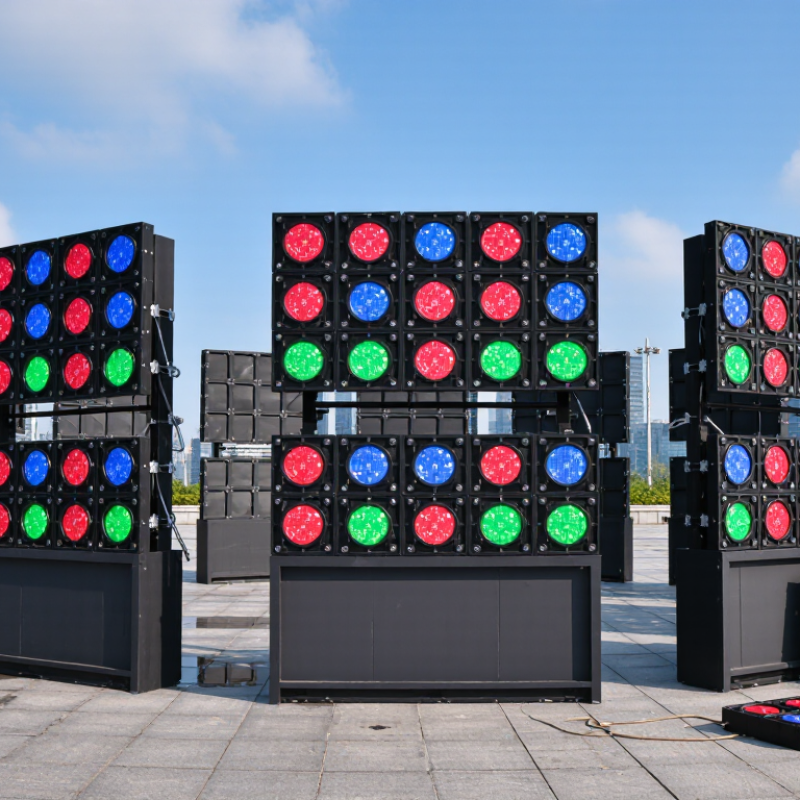
What Outdoor DIP LED Displays Are and How They Work
Outdoor DIP LED displays use individual red, green, and blue light-emitting diodes mounted in dual in-line packages. Each package forms a visible pixel, and groups of pixels create text, images, or video. The exposed, sturdy construction is suited to large signs viewed from a distance. Bright output helps sunlight readability. Very bright, though, can be uncomfortable at night without suitable brightness control.
A control system sends image data to driver circuits, which switch the LEDs on and off in rapid patterns. The mix of red, green, and blue light produces different colors. Pixel pitch—the distance between neighboring pixels—affects image detail and viewing distance. Wider pitch often suits roadside screens viewed from far away; closer viewing needs finer spacing. Simple in principle.
Outdoor performance depends on more than the diode package. A sealed cabinet, drainage, ventilation, and appropriate electrical protection help guard against rain, dust, and heat. Buyers should check the stated ingress rating and ask how it was tested, rather than relying on a vague “weatherproof” label. From field experience, service access matters too: replacing one damaged module should not require dismantling a whole display. DIP screens can be robust, but they may look coarse up close, and specifications alone do not reveal every installation problem.
Key Features and Performance Standards of Outdoor DIP LED Displays
Outdoor DIP LED displays must survive sunlight, rain, dust, and sharp temperature changes. Their performance begins with a sealed cabinet and stable pixel modules. An IP65-rated front surface helps resist water and dust during outdoor installation. However, an IP rating does not guarantee long-term reliability without proper drainage and cable protection.
Experienced buyers often check brightness between 5,000 and 8,000 nits for direct sunlight. Excessive brightness can waste energy and shorten LED life. A refresh rate above 1,920 Hz supports smoother video and reduces camera scanning lines. Wide viewing angles keep text readable from side positions. Good displays also maintain consistent color, grayscale depth, and brightness across the cabinet.
Thermal design deserves close attention. Aluminum structures, controlled ventilation, and temperature monitoring reduce heat-related failures. Surge protection, grounding, and electromagnetic compatibility testing support safer operation. Buyers should request aging-test records, waterproofing reports, and measured power data, not only marketing claims. Field inspections should include loose connectors, cabinet gaps, and brightness variation between modules.
Small defects matter. A single unstable module can become highly visible at night. Standards help, but installation quality still changes the result. For coastal projects, corrosion-resistant materials and sealed connectors are practical requirements. For cold regions, startup performance below freezing needs verification. A specification sheet may look complete, yet real weather exposure can reveal weaknesses that laboratory testing misses.
Outdoor DIP LED Display Water-Resistance Test Benchmarks
IEC 60529 specifies a water flow rate of 12.5 L/min for the IPX5 water-jet test and 100 L/min for the IPX6 powerful-water-jet test. These figures describe test conditions, not a display’s brightness or overall durability.
Leading Outdoor DIP LED Display Manufacturers and Their Strengths
Outdoor DIP LED display manufacturers remain important where brightness, durability, and long viewing distances matter. Industry reports from MarketsandMarkets project the global LED display market to grow at roughly 9% annually through 2028. DIP technology still suits stadiums, highways, and large commercial facades because separate red, green, and blue chips can deliver strong daylight visibility. It is not always the best choice for close viewing.
Leading manufacturers show different strengths. Some specialize in high-luminance modules exceeding 7,000 nits, while others focus on efficient heat dissipation and long operating cycles. Reliable suppliers commonly provide IP65-rated cabinets, corrosion-resistant coatings, and sealed power compartments. Their testing should include thermal aging, vibration checks, humidity exposure, and pixel-failure monitoring. A factory visit reveals more than a polished product brochure.
Technical consistency matters. The U.S. Department of Energy has repeatedly linked LED performance with thermal management and driver quality, not chips alone. Buyers should request brightness measurements, refresh-rate records, color-uniformity data, and independent safety documentation. A refresh rate above 3,840 Hz can support clearer camera images, although site conditions still influence results. Some manufacturers advertise extreme specifications without explaining measurement methods. That deserves scrutiny. Real experience shows that cabinet sealing, spare-part planning, and installation training often decide whether a display performs well after three rainy seasons. There is no perfect supplier; transparent testing is the stronger advantage.
China Top Outdoor DIP LED Display Manufacturers for Buyers – Leading Outdoor DIP LED Display Manufacturers and Their Strengths
Buyer-focused comparison of common outdoor DIP LED display manufacturer capabilities. Figures below are typical industry ranges or selection criteria, not specifications for any named manufacturer. Confirm exact performance, test methods, and certifications with each supplier.
| Manufacturer Strength / Buyer Dimension | Typical Capability or Specification | Why It Matters to Buyers | What to Verify |
|---|---|---|---|
| Outdoor DIP LED expertise | Through-hole DIP pixels are commonly used in outdoor displays where high brightness and visibility over longer viewing distances are priorities. | Helps assess whether the display technology suits billboards, stadium perimeters, and other large-format installations. | Ask for a working sample, pixel-pitch options, viewing-distance guidance, and project references for comparable environments. |
| Brightness and daylight readability | Outdoor LED displays are commonly specified in the several-thousand-nit range; the required level depends on sunlight exposure, orientation, and local conditions. | Adequate brightness supports legibility in daylight, while brightness control can reduce unnecessary power use at night. | Request measured brightness data, measurement conditions, automatic dimming options, and nighttime operating settings. |
| Weather resistance | Outdoor cabinets and modules are designed with sealed construction; IP ratings should be stated separately for the front and rear where applicable. | Ingress protection is important for installations exposed to rain, dust, and outdoor cleaning. | Check the exact IP rating, applicable test standard, test report, drainage design, and maintenance access. |
| Heat management and reliability | Cabinet design, ventilation, component selection, and operating temperature limits all affect performance in hot or cold climates. | Effective thermal design can help reduce heat-related failures and maintain stable operation. | Request operating-temperature limits, thermal test results, cooling details, and the proposed maintenance schedule. |
| Power efficiency | Power consumption varies with pixel pitch, brightness, content, refresh settings, and cabinet design; maximum and typical values should both be provided. | A realistic power estimate helps buyers size electrical infrastructure and forecast operating costs. | Compare power figures at stated brightness and content conditions, and confirm voltage, peak load, and power-supply redundancy. |
| Cabinet customization | Cabinet dimensions, mounting structure, service access, and module layout can be configured to suit the installation. | A suitable cabinet design can simplify installation and ongoing maintenance. | Confirm cabinet drawings, total weight, wind-load requirements, access method, and responsibility for structural engineering. |
| Quality control and testing | Relevant checks may include incoming-material inspection, module aging, cabinet testing, and final display testing. | Documented quality procedures make production consistency easier to evaluate. | Request inspection records, acceptance criteria, test videos, and details of how pixel defects are handled. |
| Control system compatibility | The display system should specify supported input formats, control hardware, software, network options, and remote-monitoring functions. | Compatibility affects content workflows, system integration, and troubleshooting. | Confirm supported interfaces, software licensing, remote access requirements, and spare-part availability. |
| Warranty and after-sales support | Warranty duration, covered components, response times, and spare-parts arrangements differ by supplier and contract. | Clear support terms help reduce operational risk over the display’s service life. | Review written warranty terms, exclusions, remote-support process, replacement-part lead times, and local service coverage. |
Note: Obtain project-specific quotations and technical documents before comparing suppliers. Performance depends on the complete display system, installation, operating conditions, and test methodology.
How Buyers Can Evaluate Manufacturers and Compare Products
Outdoor DIP LED display buyers should evaluate manufacturers beyond catalog brightness. MarketsandMarkets estimates the global LED display market will grow from about USD 7.7 billion in 2023 to USD 13.7 billion by 2028. That growth attracts capable suppliers, but also uneven quality. Ask for factory audit records, production photos, component traceability, and recent outdoor installation references. Test it outdoors. Do not guess.
Compare brightness under direct sunlight, not inside a showroom. Measure power consumption at normal operation and peak load. Check the viewing angle, refresh rate, grayscale performance, and cabinet weight. For rain and dust, confirm the tested IP rating under IEC 60529, rather than accepting a sales description. Thermal design matters too. A cabinet that feels hot after two hours may age faster in a summer installation. According to Grand View Research, energy efficiency and longer service life are major purchasing factors in the expanding LED display market.
A serious manufacturer should provide module test reports, calibration procedures, spare-part ratios, and a clear warranty process. Compare the same pixel pitch, brightness level, cabinet material, and control system; otherwise, quotations are misleading. A cheaper offer may exclude power supplies, steel structures, or maintenance access. That mistake is common. Require a sample cabinet and run it continuously for at least 72 hours. Inspect dead pixels, color consistency, water drainage, and connector sealing. Buyers should also question vague claims such as “military-grade” or “maintenance-free.” Some specifications look impressive but lack independent evidence.
Steps for Selecting and Purchasing an Outdoor DIP LED Display
Selecting an outdoor DIP LED display starts with the installation site. Measure the viewing distance, available wall or frame space, and exposure to direct sunlight. A roadside screen viewed from far away may need a different pixel pitch than a display outside a shop. Check the local climate, too. Rain, dust, heat, and coastal air can affect cabinet materials and maintenance needs.
Ask manufacturers for the display’s brightness range, protection rating, operating temperature, and service access details. Request test reports and confirm what conditions they cover; a rating alone does not explain every installation risk. Inspect sample modules if possible. Look for consistent color, secure connectors, and clear labels. Small details matter. Compare the warranty, spare-module availability, delivery schedule, and technical support in writing. A low quotation can leave out installation hardware or commissioning.
Before ordering, provide a site drawing and describe how the display will be used each day. Confirm power requirements, control system compatibility, mounting loads, and cable routes with qualified installers. Ask for a layout or mock-up, then review viewing angles and maintenance access. Keep the agreement specific about acceptance tests and replacement parts. I have seen buyers focus heavily on brightness and overlook access for repairs; that can make routine service awkward. No checklist removes every uncertainty, so leave room in the budget for site adjustments.

