top of page

2026 Top Chandelier LED Lamp Types for Global Buyers?

Choosing a chandelier in 2026 involves more than matching a fixture to a room. Global buyers compare light output, materials, installation needs, and long-term upkeep. A Chandelier Led Lamp can combine decorative form with lower-energy LED lighting, but product labels do not tell the whole story. Check the stated color temperature, dimming method, driver details, and replaceability of components. Small differences matter. A warm 2700K light, for example, can make a dining room feel inviting, while a cooler tone may suit a bright commercial lobby. Neither is automatically better.

Popular styles include crystal chandeliers, clean-lined linear fixtures, compact mini designs, and sculptural modern forms. Crystal remains striking, though its weight and cleaning needs deserve attention. Linear models work well above long tables, but their length must fit the room and ceiling height. Mini chandeliers can add detail to smaller spaces without overwhelming them. Smart controls are another option, yet compatibility should be confirmed before ordering. That assumption can be wrong. Buyers should request clear product specifications, installation guidance, warranty terms, and real finish samples where possible. They should also check that the fixture and its electrical components suit the destination market’s requirements. These details are easy to overlook in a polished catalog. This guide compares the main chandelier LED lamp types and explains where each may perform best. The right choice is not always the most elaborate one. It is the fixture whose light, proportions, and maintenance needs fit the actual space.
2026 Top Chandelier LED Lamp Types for Global Buyers?

Understanding Chandelier LED Lamps and Their Key Features

A chandelier LED lamp combines a decorative frame with light-emitting diodes, either built into the fixture or fitted as replaceable bulbs. Integrated LEDs can create slim arms and compact details, while replaceable bulbs offer easier changes later. Check the product specifications carefully. Lumens indicate brightness; watts mainly describe energy use. Color temperature, measured in kelvins, affects the mood: warm white often suits dining areas, while neutral white can make entryways feel clearer.

Tips: Check dimmer compatibility before buying, since not every LED works with every dimmer. Compare the fixture’s size with your table or ceiling height. A wide chandelier above a small table can feel crowded. Also confirm the listed weight and mounting requirements with a qualified installer.

Color quality matters, too. A higher color rendering index can help fabrics and food look more natural, though it does not guarantee that every finish will appear accurate in every room. Look for a stated CRI and a clear warranty. If possible, view the lamp in lighting similar to your home. Photos can be misleading. Even careful specifications leave some uncertainty; the final effect depends on wall colors, ceiling height, and nearby light sources.

2026 Top Chandelier LED Lamp Types for Global Buyers: Understanding Common Screw Bases

Edison screw-base numbers indicate the nominal cap diameter in millimeters. E12 and E14 bases are commonly found on smaller chandelier lamps, while E26 and E27 are used on larger sockets. Check the fixture’s socket type and local electrical requirements before buying; base size alone does not determine bulb shape or compatibility.

Exploring the Main Chandelier LED Lamp Types in 2026

2026 Top Chandelier LED Lamp Types for Global Buyers?
Exploring the Main Chandelier LED Lamp Types in 2026

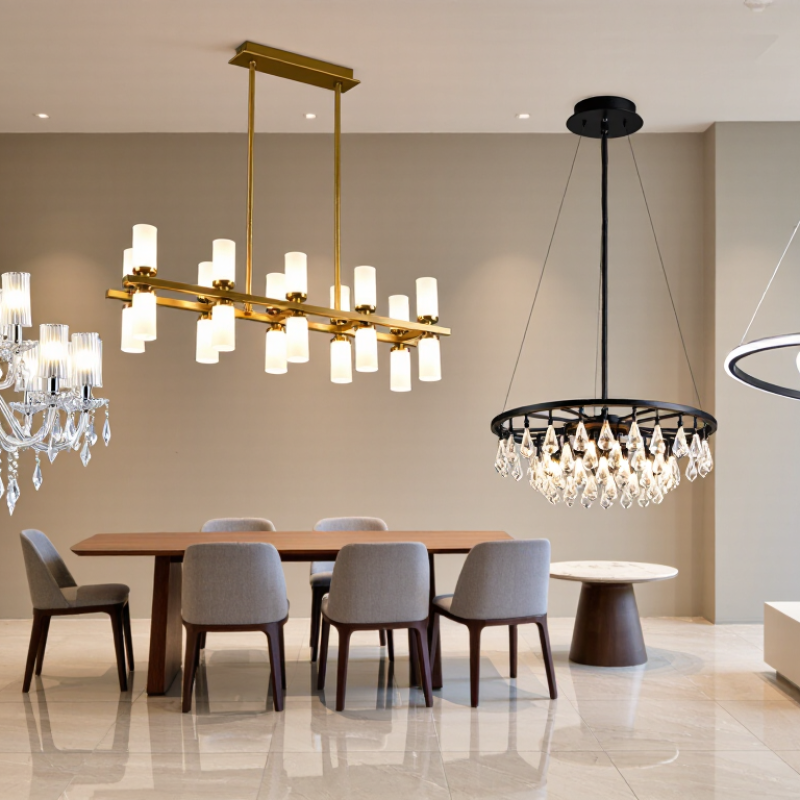
Chandelier LED lamps come in several practical forms. Crystal designs use LED light sources to create bright, sparkling reflections. Ring and linear chandeliers suit modern dining areas, while tiered fixtures add visual depth to taller rooms. Some models have integrated LEDs; others use replaceable bulbs. That difference matters when planning future maintenance. Integrated units can look seamless, but repairs may require more specialized service.

For flexible lighting, choose a fixture with compatible dimming and a suitable color temperature. Warm white light can make a dining table feel inviting. Neutral white may work better in kitchens or shared work areas. Check the fixture’s dimensions against the room and ceiling height. A wide chandelier can overwhelm a small table. A beautiful fixture can still feel too bright, or uneven. I would not rely on appearance alone.

Tips: Ask for clear specifications on light output, color rendering, driver access, and dimmer compatibility. Confirm whether LED modules or bulbs can be replaced. For a high ceiling, review the hanging length before ordering. Keep the installation area accessible, too. These checks are simple, but easy to miss.

2026 Top Chandelier LED Lamp Types for Global Buyers? - Exploring the Main Chandelier LED Lamp Types in 2026

Chandelier Type Typical Design Common LED Configuration Suitable Spaces Light Distribution Key Buying Considerations
Crystal LED Chandelier LED light sources paired with clear, faceted, or colored crystal elements. Integrated LED modules or LED-compatible replaceable lamps, depending on the fixture. Dining rooms, hotel lobbies, reception areas, and formal living rooms. Creates decorative sparkle and reflected highlights; the amount of useful room light depends on the design and diffuser. Check cleaning access, glare control, dimmer compatibility, and whether the LED light source is replaceable.
Linear Chandelier An elongated fixture arranged along a horizontal bar or frame. Linear LED boards or strips, sometimes concealed behind a diffuser. Dining tables, kitchen islands, conference tables, and long counters. Provides an extended band of light suited to rectangular surfaces. Choose a length and suspension height appropriate for the table or island; verify that the ceiling outlet and mounting support are suitable.
Ring or Halo Chandelier One or more circular LED rings, often suspended at different heights. Integrated LED strips or boards following the ring shape. Modern living rooms, stairwells, dining areas, and hotel spaces. Can provide broad downward or upward light, depending on the LED orientation and diffuser. Check ring diameter, hanging height, dimming method, and whether the fixture can be adjusted for sloped ceilings.
Sputnik or Starburst Chandelier Multiple arms radiate from a central body, giving the fixture a starburst appearance. Small LED lamps or integrated LED modules at the ends of the arms. Living rooms, bedrooms, dining areas, and mid-century-inspired interiors. Spreads light in several directions; exposed light sources may create more direct glare. Consider the fixture's overall diameter, arm clearance, bulb visibility, and the room's desired brightness.
Candle-Style Chandelier Arms or tiers with candle-like light points, available in traditional and contemporary forms. Usually uses replaceable LED candle-shaped lamps with compatible sockets. Dining rooms, bedrooms, entryways, and traditional interiors. Produces multiple points of light; shades or candle covers can affect brightness and appearance. Confirm socket type, lamp shape, maximum permitted lamp wattage, and whether the lamps support the intended dimmer.
Drum Chandelier A central frame surrounded by a drum-shaped fabric, acrylic, or metal shade. Integrated LED modules or replaceable lamps positioned inside the shade. Bedrooms, dining rooms, living rooms, and spaces where softened light is preferred. The shade diffuses light and can reduce direct glare; opaque shades may limit upward or side light. Check shade material, light transmission, cleaning requirements, and the fixture's total height.
Tiered Chandelier Two or more stacked levels of arms, rings, or decorative elements. Multiple LED lamps or integrated LED sections arranged across the tiers. Large dining rooms, high-ceiling living rooms, foyers, and stair halls. Can distribute light across a large vertical area, with the result depending on the number and direction of light sources. Measure ceiling height and suspension clearance; confirm the fixture's weight and required ceiling support before installation.
Flush or Semi-Flush Chandelier A decorative chandelier form mounted close to, or a short distance below, the ceiling. Integrated LEDs or replaceable LED lamps, depending on the model. Rooms with lower ceilings, hallways, bedrooms, and compact dining areas. Provides ceiling-mounted ambient light; distribution varies with the diffuser and shade design. Compare fixture depth with available headroom and check whether the light spreads evenly across the room.

Comparing Light Output, Efficiency, Color, and Dimming Options

For global buyers in 2026, chandelier LED options generally include integrated LED fixtures, replaceable LED lamps, and candle-shaped bulbs. Compare measured light output in lumens, not wattage alone. A large dining room may need more output than a compact entryway, while clear glass shades can create bright spots on a table. Check the fixture’s published lumen figure and beam distribution. Efficiency, expressed as lumens per watt, helps compare energy use, but it does not show how evenly light reaches the room. Numbers can mislead.

Color affects the room’s feel. Around 2700K gives a warm, candle-like tone; 3000K looks slightly cleaner, while 4000K can feel cooler in a home setting. For dining spaces, a high color-rendering index can make food and wood finishes appear more natural. Still, the rating cannot guarantee that every color will look right. Dimming deserves equal attention. Confirm that the LED driver, dimmer, and control system are compatible, and check whether the fixture dims smoothly at low settings. Some models flicker or stop dimming before the room feels comfortably soft. Test a sample when possible, especially with layered lighting.

Matching Chandelier LED Lamps to Room Styles and Global Standards

A chandelier’s LED lamps should suit the room before they suit a catalogue photograph. In a dining room, warm-white lamps around 2700–3000 K soften wood and skin tones. Clear filament-style LEDs keep a traditional glass chandelier visually light. Frosted lamps reduce glare in open-frame designs. Scale matters. Large lamps can crowd narrow shades, while small ones may leave a fixture looking unfinished.

For modern rooms, compact LED capsules or candle-shaped lamps often fit slim arms and clean lines. Check the lamp’s base, maximum wattage, and dimmer compatibility against the fixture instructions. A dimmable label alone does not guarantee smooth control; some combinations flicker at low settings. Still, details bite. Test a sample lamp if possible, especially where several fixtures share one dimmer.

Global buyers also need to match electrical ratings and documentation to the destination market. Confirm the stated voltage and frequency, and check that product markings and conformity documents are accepted locally. Do not assume one specification fits every region. In bathrooms or covered outdoor areas, verify the fixture’s suitability for the location and moisture exposure. A practical checklist can prevent costly returns, though it may not catch every installation issue. Have a qualified electrician confirm wiring and compatibility when requirements are unclear.

Choosing the Right Chandelier LED Lamp for Your Needs

2026 Top Chandelier LED Lamp Types for Global Buyers?
Choosing the Right Chandelier LED Lamp for Your Needs

Choosing a chandelier LED lamp begins with the fixture, not the trend. Check the socket type, maximum wattage, and whether the lamp is enclosed. Then compare brightness in lumens; wattage alone does not show how bright a bulb will appear. A warm 2700 K tone can soften a dining room, while 3000 K often looks clearer in a hallway. Small details matter.

Efficiency is useful, but compatibility comes first. The U.S. Department of Energy reports that LEDs use at least 75% less energy and can last up to 25 times longer than incandescent lighting. These are broad comparisons, not guarantees for every chandelier or operating condition. Dimming can also be uneven when an LED lamp and dimmer are not compatible. It is an easy detail to overlook, and a real reason to check the fixture manual before buying.

Tips: Measure the bulb’s visible space between decorative arms, and check its shape against the shade. For a multi-light chandelier, matching color temperature helps avoid a patchy glow. If specifications are unclear, ask a qualified lighting professional; guessing can waste money. There is no perfect choice for every room. (168 words)

bottom of page