How to Use Strong Base Anion Resin for Effective Water Treatment?
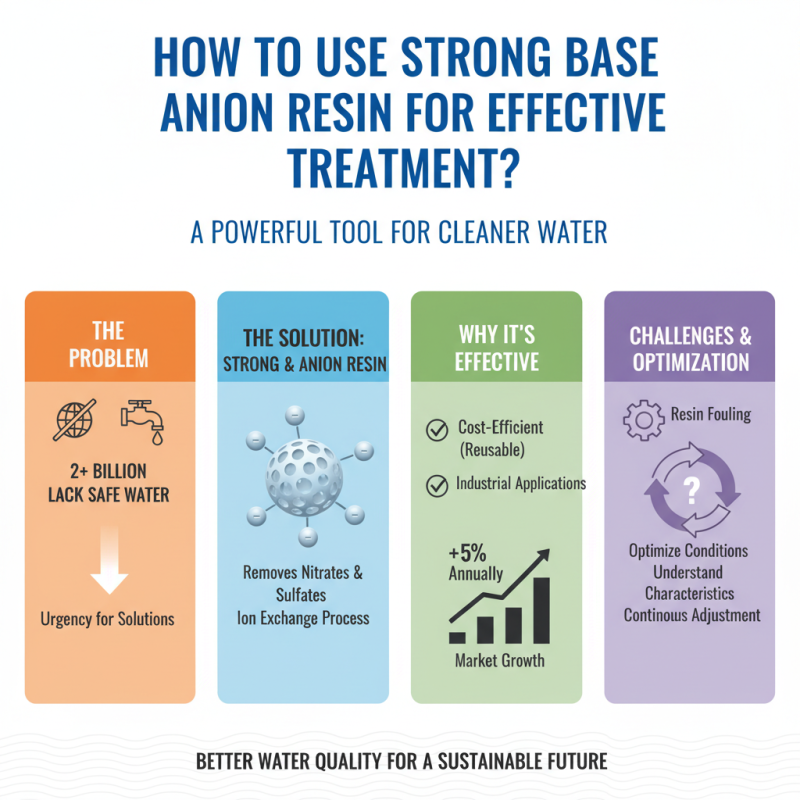
Water treatment is critical for public health and environmental sustainability. Recent studies indicate that over 2 billion people lack safe drinking water, highlighting the urgency for effective solutions. One powerful tool in this field is strong base anion resin. This type of resin is widely used in industries for ion exchange processes. According to the Global Water Treatment Market report, strong base anion resins have grown in popularity, with a projected increase of 5% annually.
These resins effectively remove unwanted anions like nitrates and sulfates from water. Their ability to regenerate multiple times makes them cost-efficient for various applications. However, challenges persist. Some users report issues with resin fouling and regeneration efficiency. It's essential to optimize conditions to maximize performance. Understanding the specific characteristics of strong base anion resin can lead to better water quality treatment outcomes. This requires ongoing reflection and adjustment. Exploring these resins further can illuminate their potential advantages and shortcomings in water treatment strategies.
Understanding Strong Base Anion Resin and Its Properties
Strong base anion resin is a vital component in water treatment processes. These resins are composed of polymers that can exchange anions in water. This ability makes them effective at removing various contaminants, including nitrates and sulfates. They are essential in producing high-purity water for industrial applications.
The unique structure of strong base anion resin allows it to hold different functional groups. These groups interact with dissolved anions, capturing them efficiently. This interaction results in cleaner water outputs. However, the effectiveness of these resins can be influenced by factors like water temperature and pH levels. Untreated water with high contaminant levels might overwhelm the resin's capacity, leading to partial removal.
Maintenance is crucial in using strong base anion resin effectively. Regular regeneration with proper chemicals ensures longevity. Over time, resins can degrade, reducing efficiency. Users must monitor performance and be prepared to replace them. Mistakes in maintenance can lead to increased costs and poorer water quality. Understanding these nuances helps optimize water treatment systems.
Applications of Strong Base Anion Resin in Water Treatment
Strong Base Anion Resin plays a vital role in water treatment processes. This resin effectively removes various anions, including nitrates and sulfates. It is widely used in industrial applications where high purity water is essential. Many industries, such as pharmaceuticals and electronics, rely on this technology.
In municipal water systems, strong base anion resins help reduce contaminants. They can efficiently address taste and odor issues in drinking water. However, there are challenges. The resin can become exhausted over time, requiring proper maintenance. Regular monitoring of resin performance is crucial.
Some facilities may struggle with resin regeneration. Optimization of the regeneration process is needed for effective use. Many operators overlook the importance of this step. Each application demands careful evaluation of the resin's performance. Finding the right balance can lead to successful water treatment outcomes.
Applications of Strong Base Anion Resin in Water Treatment
Step-by-Step Guide to Using Strong Base Anion Resin
Strong base anion resin is essential for effective water treatment. It removes contaminants like nitrates and heavy metals effectively. To use it properly, follow these steps closely.
Begin by preparing the resin. Rinse it thoroughly to eliminate fine particles. Next, fill your treatment system with the resin. Ensure it is evenly distributed. Adjust the flow rate of your water to avoid resin fluidization. A slow flow allows for optimal contact time. Check the pH level of the water beforehand.
Monitor the resin’s performance regularly. Sometimes, it can become exhausted or fouled. If you notice a decrease in efficiency, regenerate the resin promptly. This involves using a strong alkaline solution. Remember, the exact method may vary. Finally, always keep records of usage. Reflect on these details; they can greatly influence the treatment’s success.
How to Use Strong Base Anion Resin for Effective Water Treatment?
| Step | Description | Expected Outcome |
| 1 | Prepare the resin by rinsing it with deionized water to remove any fines. | Clean resin ready for use. |
| 2 | Set up the water treatment unit with the strong base anion resin in the appropriate column. | Resin properly positioned for ion exchange. |
| 3 | Slowly introduce the water to be treated through the resin column. | Water begins to interact with the resin. |
| 4 | Monitor the flow rate to ensure optimal contact time between water and resin. | Effective ion exchange process. |
| 5 | Collect the treated water and test for desired contaminants removal. | Water meets quality standards for use. |
| 6 | Regenerate the resin as necessary to maintain effectiveness. | Resin stays efficient for future treatments. |
Maintenance and Regeneration of Anion Resin Systems
Maintaining anion resin systems is crucial for effective water treatment. Regular monitoring of the resin's performance is essential. Data from the The American Water Works Association indicates that improperly maintained systems can lose up to 50% efficacy within a year. This decline impacts contaminant removal efficiency significantly.
Regeneration of anion resin is a critical process. Many facilities follow a standard regeneration routine using sodium hydroxide. This is effective but requires precise control. If the regeneration solution is too strong, it can damage the resin structure. A study by the Water Environment Federation shows that 30% of plants experience resin degradation from improper regeneration.
Operative staff should invest time in training on proper techniques. The importance of maintaining optimal conditions cannot be overstated. Not only does this practice ensure better water quality, but it also prolongs the life of the resin. However, many facilities still overlook this. Reflecting on practices and outcomes can lead to improved processes in the future.
Safety Considerations When Handling Anion Resins in Water Treatment
When handling strong base anion resins for water treatment, safety is paramount. These resins can release hazardous chemicals, such as amines and solvents, during processing. According to industry data, improper handling can lead to skin irritation or respiratory issues. Always wear appropriate protective gear, including gloves, masks, and goggles, to minimize exposure.
Tips: Ensure proper ventilation in your workspace to reduce inhalation risks. When pouring or transferring resins, do it slowly to prevent spills.
It’s crucial to be aware of the potential for cross-contamination. Different anion resins can react adversely with each other. This might lead to unforeseen chemical reactions. Always use designated containers and tools for each resin type. Regular training on safe handling practices should be implemented.
Tips: Conduct regular safety audits in your facility. Encourage open discussions about safety issues among staff. Regularly review incident reports to identify areas needing improvement.

