What is Led Street Lights and How Do They Work?
Led Street Lights are transforming urban landscapes. These lights are energy-efficient and environmentally friendly. They provide bright illumination, enhancing safety for pedestrians and drivers alike.
The technology behind Led Street Lights is fascinating. Utilizing light-emitting diodes, they convert electricity into light with minimal heat loss. This efficiency not only reduces energy costs but also decreases carbon footprints. However, the adoption of Led Street Lights can be uneven. Some cities embrace the change, while others hold onto traditional lighting methods.
While the benefits of Led Street Lights are clear, challenges persist. Initial installation costs can be high. Additionally, some communities express concerns over the intensity of the light and its impact on wildlife. As cities grow, reflection on these issues is vital. Balancing progress with environmental and social considerations remains a key challenge in the ongoing transition towards sustainable urban lighting.
What Are LED Street Lights? Definition and Overview
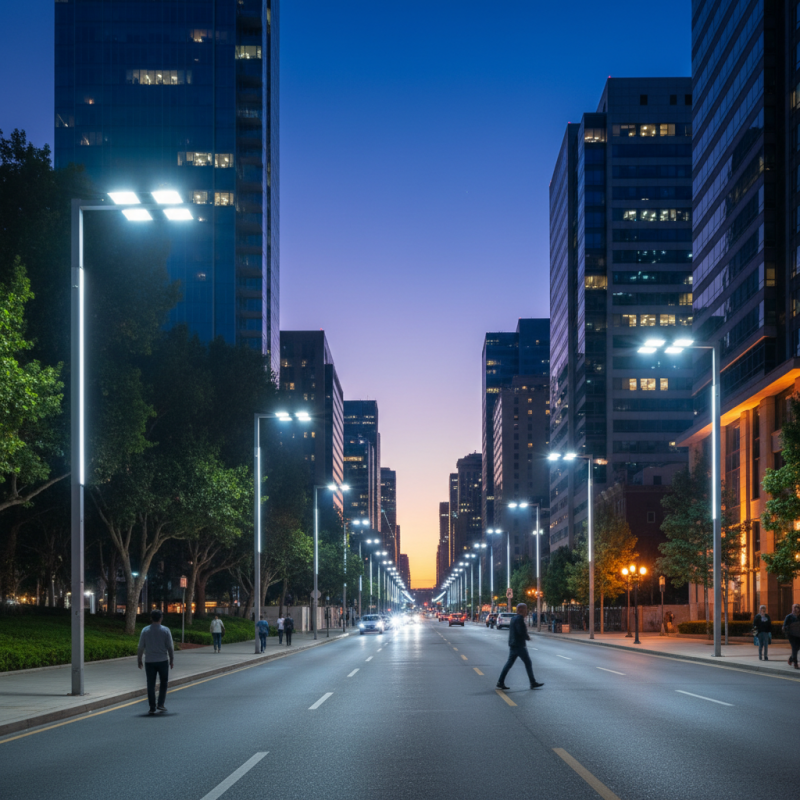
LED street lights are an innovative lighting solution for urban areas. These lights use light-emitting diodes (LEDs) to produce bright, energy-efficient illumination. Unlike traditional street lights, which consume more energy and generate significant heat, LED fixtures are designed to last longer and operate cooler. This technology significantly reduces energy costs for municipalities.
Incorporating LED street lights can improve safety and visibility in city streets. They emit a clearer, more focused light compared to standard options. This clarity helps drivers and pedestrians see better at night. Some cities have reported fewer accidents after switching to LED lighting. However, the installation process can be complex and may face resistance.
Not all LED street lights are created equal. Variability in quality can lead to uneven performance. Poorly designed fixtures might flicker or have reduced lifespan. Addressing these concerns is crucial for city planners. Urban areas must continue to evaluate their choices and seek the best options for residents.
What is Led Street Lights and How Do They Work?
| Feature | Description |
|---|---|
| Definition | LED street lights are outdoor lighting fixtures that use light-emitting diodes (LEDs) as their light source. |
| Energy Efficiency | LED street lights are more energy-efficient compared to traditional street lighting, consuming up to 70% less energy. |
| Lifespan | They have a longer lifespan, typically lasting over 50,000 hours, reducing replacement costs. |
| Brightness | LEDs provide bright and consistent illumination, improving visibility and safety in urban areas. |
| Environmental Impact | They are free of toxic materials, such as mercury, and are fully recyclable, making them environmentally friendly. |
| Smart Technology | Many modern LED street lights can be integrated with smart technology, enabling features such as remote monitoring and dimming controls. |
| Cost | Though initial installation costs might be higher, the long-term savings on energy and maintenance make them cost-effective. |
The Technology Behind LED Street Lights: Components and Design
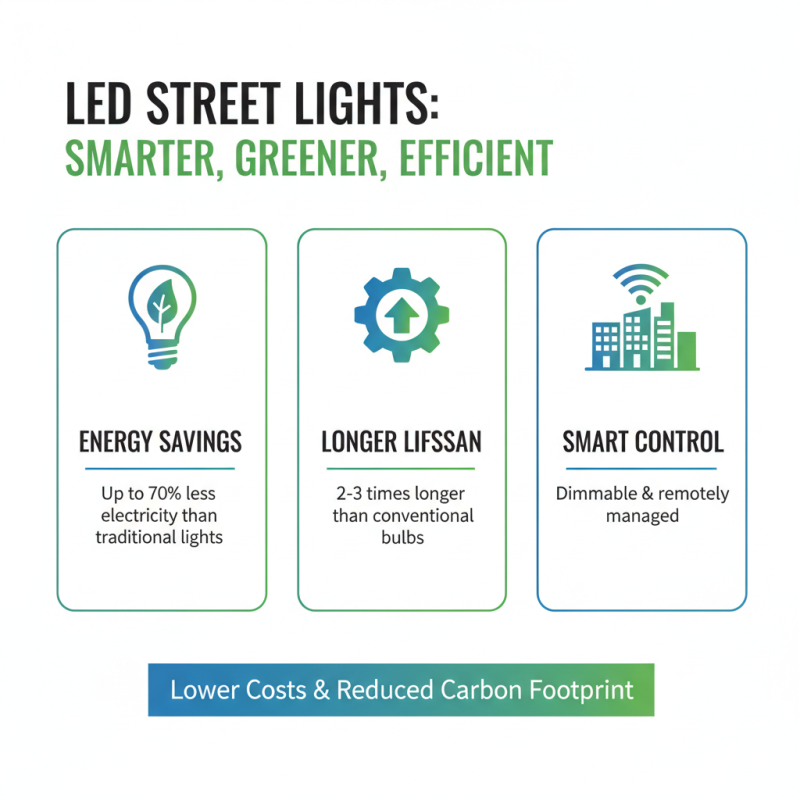
LED street lights incorporate several components that work together for efficient illumination. The main part is the LED chip, which emits light when electricity passes through it. This process is quite different from traditional bulbs. The heat sink is another key component, helping to dissipate heat generated by the LED. Good thermal management extends the lifespan of the lights.
The design of LED street lights is often adjustable. They come in various shapes and sizes to fit different urban environments. The light distribution pattern can be designed to provide optimal illumination without causing glare. However, not every design is perfect. Some may fail to balance brightness and energy efficiency. In some cases, these lights are too bright for residential areas, causing light pollution.
These street lights also include sensors for dimming or brightening based on the time of day or surrounding activity. The integration of smart technology can lead to better energy management but also raises concerns. For instance, over-reliance on technology could lead to failure during outages. Balancing innovation and practicality continues to be a challenge as cities evolve into smart ecosystems.
How LED Street Lights Work: Principles of Operation
LED street lights have gained popularity due to their efficiency. These lights use Light Emitting Diodes (LEDs) as their primary light source. Unlike traditional street lights, LEDs convert electricity directly into light. This process allows for significant energy savings.
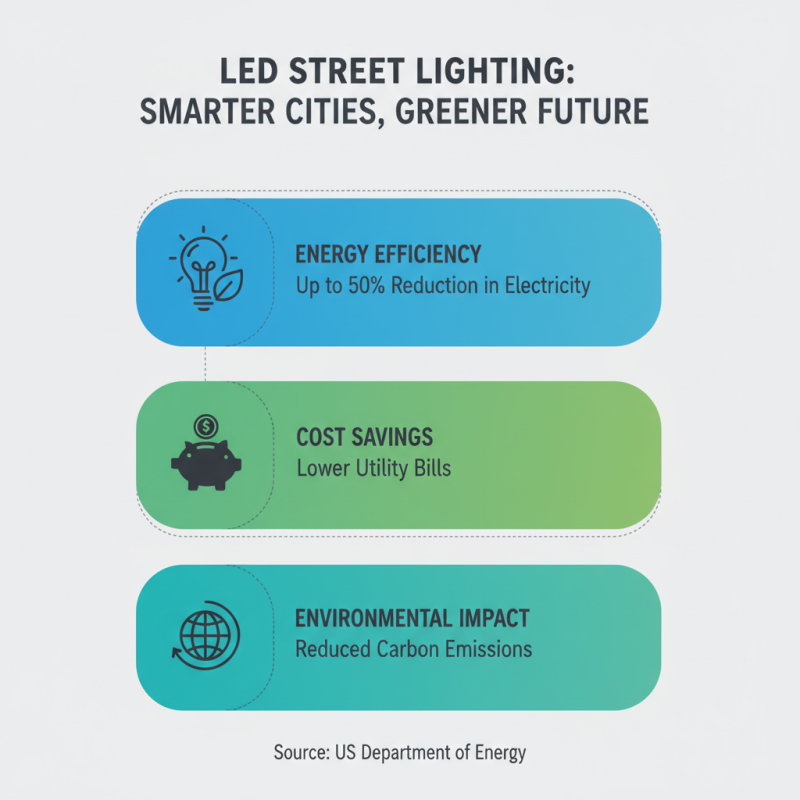
The principles of operation behind LED street lights are quite fascinating. They emit light when an electric current passes through a semiconductor material. This phenomenon creates photons, which are visible light particles. According to a report by the U.S. Department of Energy, upgrading to LED street lights could reduce energy consumption by up to 50%. The efficiency of LEDs also leads to a longer lifespan, often exceeding 20,000 hours, compared to only 1,000 hours for conventional incandescent bulbs.
Yet, there are challenges. Not all municipalities have access to adequate funding for these upgrades. Sometimes, the initial installation cost can be a barrier. Additionally, some people express concerns about light pollution caused by the bright LED lights. This points to the need for thoughtful designs that ensure both safety and environmental consideration. Balancing energy efficiency with community needs remains a critical aspect of the ongoing evolution of street lighting.
Advantages of LED Street Lights: Energy Efficiency and Longevity
LED street lights have transformed urban landscapes. These lights consume significantly less energy compared to traditional street lights. They operate on a principle that converts electricity into light using semiconductors. This process not only saves energy but also generates less heat.
One major advantage is longevity. LED lights can last up to 25,000 hours or more. This means fewer replacements, leading to reduced labor and materials costs. Fewer maintenance needs also mean less disruption for local communities. However, some may overlook the initial investment cost. It takes time to realize savings from energy efficiency.
Moreover, the light quality is often superior. LEDs provide bright, clear illumination, enhancing safety for pedestrians and drivers. Yet, a critical reflection is needed on the light’s impact on wildlife. The outdoor environment can be affected by unnatural brightness.
Striking a balance between safety and ecological considerations is essential. A comprehensive approach is vital as we transition to newer technologies.
Impact of LED Street Lighting on Urban Infrastructure and Safety
LED street lighting has become essential in urban infrastructure. These lights use light-emitting diodes, which are energy-efficient and long-lasting. Cities adopting LED technology report a significant reduction in electricity consumption—up to 50% according to the U.S. Department of Energy. This decrease not only lowers utility costs but also minimizes carbon emissions, contributing to a greener environment.
Safety is another critical factor influenced by LED street lighting. Improved visibility can reduce crime rates. A study by the University of California found that well-lit streets lead to a 20% decrease in nighttime accidents. Moreover, the enhanced brightness helps pedestrians navigate complex urban settings more safely, particularly in high-traffic areas.
Tips: When considering LED installations, assess existing street conditions. Evaluate which areas require more light. Not every street is uniform; some may need brighter options. Understand local feedback about lighting quality. Regular assessments can optimize performance and address community concerns.
Related Posts
-
What Are the Benefits of Using LED Light Street Solutions for Urban Development
-
Exploring LED Panel Light Innovations at the 138th China Import and Export Fair 2025
-
How to Choose the Right Exit Lights for Your Business Safety Needs
-

Top Strategies for Sourcing the Best Industrial Flood Lights Globally
-
What are the Benefits of Using a Led Floodlight?
-

Creative Ways to Use Strip Lights in Your Home Decor