Emergency Exit Lights How Do They Work and Why Are They Important?
Emergency Exit Lights play a crucial role in safety during emergencies. They guide individuals to exits, ensuring a swift evacuation. According to the National Fire Protection Association, over 1,400 fatalities occur yearly due to fire-related incidents in the U.S. Properly functioning exit lights can significantly reduce this number.
These lights operate automatically, illuminating pathways when power fails. Many buildings are required by code to install these lights. However, some fail to maintain them regularly. The result? Inadequate lighting, leading to confusion and chaos during evacuations.
A study by the U.S. Occupational Safety and Health Administration found that 30% of workplaces do not comply with emergency lighting regulations. This oversight raises questions. Are we prioritizing safety? Emergency Exit Lights are not just a legal requirement; they are essential for protecting lives. Neglecting their importance can lead to tragic consequences.

Understanding Emergency Exit Lights: Functions and Mechanisms
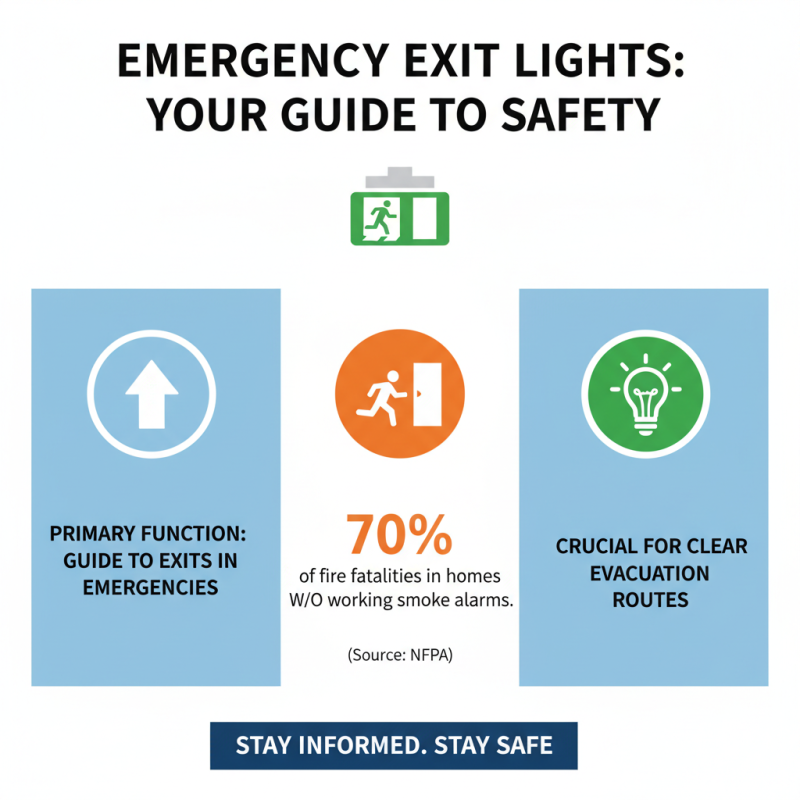
Emergency exit lights are crucial for safety in public buildings. Their primary function is to guide people towards exits during emergencies. According to the National Fire Protection Association, nearly 70% of fire-related fatalities occur in homes without working smoke alarms. This statistic highlights the importance of clear evacuation routes illuminated by emergency lights.
These lights often contain LED technology for efficiency. They maintain functionality during power outages, activating automatically. The International Building Code necessitates that emergency exit lights remain operational for at least 90 minutes after a power failure. However, many buildings fail to conduct regular inspections. One report revealed that 20% of emergency lights in commercial spaces were either malfunctioning or improperly placed, creating potential hazards.
The mechanisms behind emergency exit lights are evolving. Some designs include self-testing features that ensure they are always functional. Still, not all jurisdictions require these advancements. With only 40% of facilities conducting timely inspections, it is vital to create awareness. Emergency exit lights can only serve their purpose effectively when maintained correctly, making consistent checks essential for safety compliance.
The Importance of Emergency Exit Lights in Public Safety
Emergency exit lights play a crucial role in ensuring public safety. During emergencies, such as fires or power outages, quick evacuation is vital. These lights provide clear guidance on where to exit. They often glow in green or red, which are universally recognized colors for safety.
The installation of emergency exit lights is not just a legal requirement in many places; it is a moral obligation. Buildings, especially crowded ones, can become chaotic during an emergency. A well-illuminated exit path prevents confusion and panic. This is particularly important when visibility is low. Many people might overlook these lights in everyday situations, but their significance cannot be underestimated.
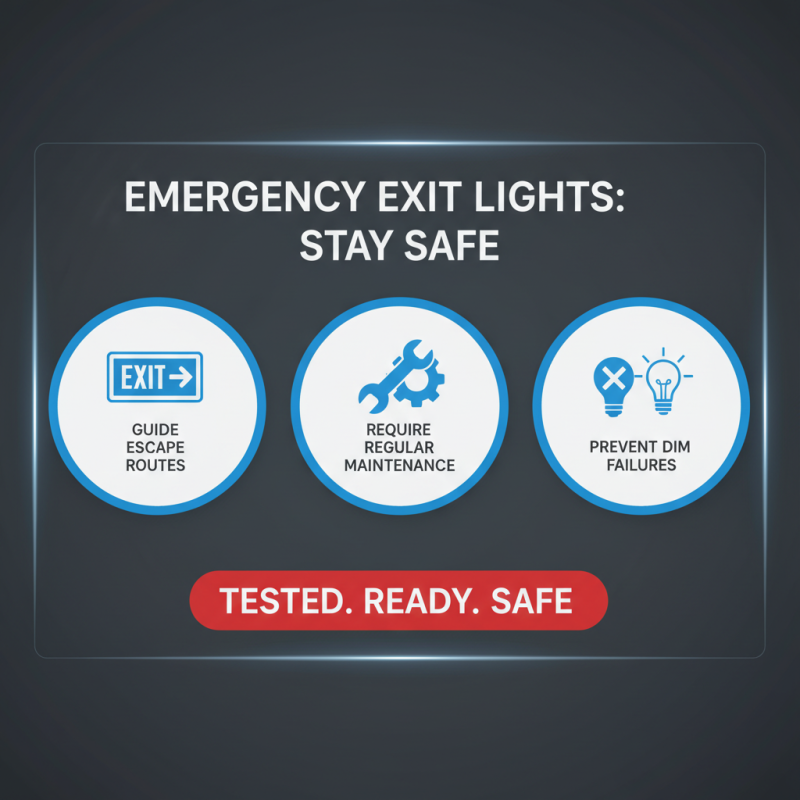
Regular maintenance is critical for these lights. Burned-out bulbs or malfunctioning systems can lead to disastrous consequences. It’s common for buildings to neglect these systems until an emergency occurs. This lack of attention can be a fatal oversight. Investing in reliable exit lighting can save lives during critical moments. Everyone should reflect on the importance of these seemingly simple fixtures. They are integral to safety, yet often taken for granted.
Emergency Exit Lights How Do They Work and Why Are They Important?
| Feature |
Description |
Importance |
| Illumination Technology |
Uses LED or fluorescent lights for emergency visibility. |
Provides clear guidance during evacuations. |
| Battery Backup |
Equipped with rechargeable batteries to ensure operation during power outages. |
Ensures functionality in emergencies when power is lost. |
| Testing and Maintenance |
Regular testing protocols to ensure lights are operational. |
Prevents failures during critical moments. |
| Placement Guidelines |
Strategically placed above exits and throughout buildings. |
Facilitates quick navigation to safety. |
| Compliance Standards |
Must meet local safety regulations and codes. |
Protects against legal liabilities and enhances safety culture. |
Types of Emergency Exit Lights and Their Applications
Emergency exit lights are essential in various settings, ensuring safety during unexpected situations. There are two main types: LED and incandescent lights. LED lights are energy-efficient and long-lasting. Incandescent lights provide a warm glow but have a shorter lifespan. Both types serve the same purpose—guiding people toward safety.
In commercial buildings, emergency exit lights are crucial. They illuminate pathways, making them visible in darkness. In schools, these lights are placed near exits and stairwells. In hospitals, they guide patients and staff away from danger. Proper installation is vital. Lights should be checked regularly.
Tips: Always test exit lights monthly. Ensure batteries are replaced as needed. Consider placement; a poor location may hinder escape routes. Regular checks can prevent failures during emergencies.
Regulatory Standards Governing Emergency Exit Lighting Systems
Emergency exit lighting systems are crucial for safety in buildings. Various regulatory standards govern these systems to ensure they function properly during emergencies.
The National Fire Protection Association (NFPA) and the International Building Code (IBC) outline requirements. They specify light intensity, duration, and placement.
Each standard aims to enhance visibility in case of power failure.
Emergency exit lights must illuminate pathways effectively. They guide occupants toward exits, reducing panic during an evacuation. Regular testing and maintenance are required to comply with standards.
It’s common to find systems not adequately checked. This oversight can lead to failures during real emergencies.
Some buildings lack adequate signage. Exit routes may be unclear, increasing risk. Inadequate training for staff can exacerbate these risks.
Employees must understand exit procedures and lighting functions. Ignoring these aspects can lead to chaos during critical moments. Investing in proper systems is essential for safety.
It ensures everyone knows they have a reliable way out, even in darkness.