How to Choose the Right Pocket Filter Media for Your Needs?
Choosing the right pocket filter media can significantly impact air quality and energy efficiency. According to industry expert John Smith, "The selection of pocket filter media is often overlooked, yet it is crucial for effective filtration." Understanding the various options and their performance is key in making an informed choice.
There are many types of pocket filter media available, each designed for specific applications. Some are more efficient at capturing particles, while others focus on airflow resistance. Choosing the wrong type can lead to higher operational costs or inadequate filtration. Different environments require different solutions, and that's the challenge.
Reflecting on this, it's important to evaluate both current needs and future requirements. The right pocket filter media should balance efficiency with cost-effectiveness. Sometimes, a more expensive option may be worth it if it offers better longevity and performance. Ignoring these aspects can result in wasted resources and decreased air quality.
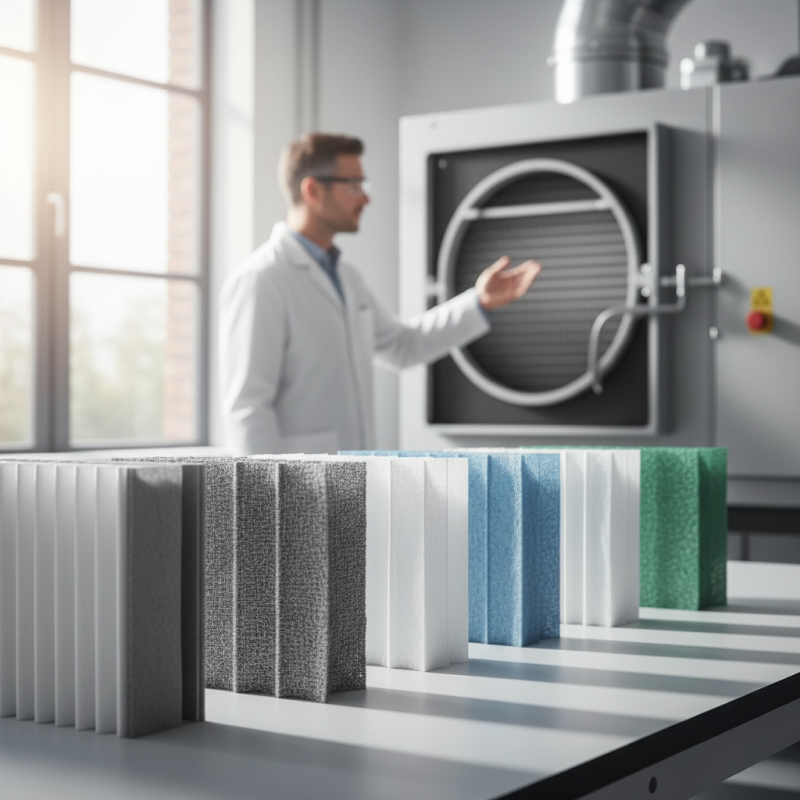
Understanding Pocket Filter Media: Types and Applications
Pocket filter media come in various types, each designed for specific applications. They are used widely in HVAC systems and air handling units. Common materials include synthetic fibers, fiberglass, and polyester. These materials offer different efficiencies and life spans. Understanding their construction is essential for effective air filtration.
The performance of pocket filters is impacted by their design and the environment they are used in. Some filters are better for capturing larger particles, while others are suited for smaller, more harmful particles. Filters can also vary in thickness and pleat count. A thicker filter may last longer but might restrict airflow. Choosing the right one can be a challenge.
Maintenance is another crucial aspect to consider. Regularly checking and replacing pocket filters can prevent system inefficiencies. An overlooked filter can reduce indoor air quality. This often leads to costly repairs or replacements. Users should reflect on their needs and environment before making a choice. Taking the time to understand the specifics can result in better air quality.
How to Choose the Right Pocket Filter Media for Your Needs?
This bar chart illustrates the efficiency ratings of different types of pocket filter media commonly used for air filtration. Each type offers varying levels of efficiency, which can significantly impact the choice based on specific needs.
Key Factors in Selecting Pocket Filter Media for Your Environment
Choosing the right pocket filter media involves understanding several key factors. Consider the specific environment where the filter will be used. Factors like humidity, temperature, and pollutant types all play crucial roles. For example, a wet environment may require a filter that resists moisture. Likewise, areas with heavy dust and particulates may need denser media to effectively capture pollutants.
Another important aspect is the efficiency rating of the filter media. High-efficiency filters capture smaller particles, but they can restrict airflow. This could lead to increased energy costs over time. Balancing efficiency and airflow is vital. Also, consider the lifespan of the filter. Some media types need frequent replacements, leading to additional maintenance costs.
Budget constraints often complicate these choices. Cheaper options might not deliver the performance needed, while premium filters can strain finances. It’s essential to reflect on your actual needs versus perceived needs. Many users find themselves opting for what looks good on paper, only to realize it doesn’t fit their environment. Take time to assess what works best for your unique situation.
Evaluating Efficiency Ratings and Specifications of Filter Media
When evaluating pocket filter media, efficiency ratings are crucial. The MERV rating system is commonly used. It measures the filter's ability to capture particles. Higher MERV ratings mean better filtration. However, high ratings don’t fit all situations. Too much resistance may strain HVAC systems.
Specifications are another vital factor. Look at dimensions, airflow, and dust holding capacity. A filter too thick might reduce air circulation. Conversely, a very thin filter may not trap enough pollutants. Consider the environment too. Different settings have varying filtration needs. Offices and industrial spaces differ significantly.
It’s important to balance efficiency and effectiveness. Sometimes, a perfectly rated filter may not perform well in practice. Installation issues could lead to air leaks. A filter that works for one space might fail in another. Always seek detailed specifications and real-world feedback. Don’t settle for the best-rated option without considering the context.
How to Choose the Right Pocket Filter Media for Your Needs? - Evaluating Efficiency Ratings and Specifications of Filter Media
| Filter Type | Efficiency Rating (%) | Material | Filter Class | Recommended Airflow (CFM) | Service Life (Months) |
| Pocket Filter A | 95 | Synthetic Fiber | M6 | 800 | 12 |
| Pocket Filter B | 90 | Polyester | F7 | 700 | 10 |
| Pocket Filter C | 85 | Glass Fiber | F6 | 600 | 6 |
| Pocket Filter D | 92 | Non-woven Fabric | H13 | 750 | 15 |
Maintenance Considerations for Long-lasting Pocket Filter Media
Maintenance is crucial for ensuring the longevity of pocket filter media. Regularly checking the filter's condition can help identify issues early. Noticing a drop in airflow or a rise in energy costs? These may be signs that the filter needs attention. It's easy to overlook, but small issues may lead to bigger problems.
Cleaning routines play a significant role in extending filter life. Depending on the environment, you might need to clean them more often. Dust buildup can restrict airflow, reducing efficiency. Consider investing time in a schedule. Ensure filters are cleaned without damaging them. Sometimes, users discover they aren't cleaning effectively.
Replacement is another aspect to consider. Not all filters last the same duration. Some might need replacing sooner than expected due to heavy usage. Monitoring performance metrics can provide insight. If you notice efficiency dropping significantly, it may be time to rethink your choice of media.
Cost Analysis: Balancing Quality and Budget for Filter Selection
Choosing the right pocket filter media involves careful consideration of both quality and cost. Industry reports indicate that filter quality significantly impacts maintenance costs. High-quality filters reduce the frequency of replacements and minimize energy consumption, ultimately balancing your budget. A study by the American Society of Heating, Refrigerating and Air-Conditioning Engineers (ASHRAE) revealed that filters with efficiency ratings of MERV 13 or higher can enhance indoor air quality, making them worth the investment despite a higher initial cost.
Tip: Always evaluate the long-term savings. A cheaper filter may lead to increased operational costs over time.
Another aspect to consider is the specific application of the filter media. Different environments may require specialized filtration properties. An analysis states that using standard filters in harsh conditions can lead to faster degradation. This can force you to replace them sooner than expected, violating your budget constraints.
Tip: Don’t overlook the efficiency ratings when comparing prices. A filter that meets your needs efficiently will always be a better investment, even at a higher price point.
Balancing price and quality is not easy. You need to reflect on the specific needs of your environment. Sometimes, saving money now results in higher expenditures later. Be mindful of how your choices align with both immediate and future financial goals.

