2026 How to Choose the Right Optical Filters for Your Needs?
Choosing the right Optical Filters can significantly impact your project’s success. Dr. Emily Tran, a leading expert in optical technologies, states, “The right optical filter can enhance clarity and precision in your visuals.” This emphasizes the importance of making informed choices.
Optical filters are vital in various applications, including photography, scientific research, and manufacturing. They come in many types, each serving different purposes. Understanding your specific needs is essential. For instance, color filters can alter light wavelengths while polarizing filters reduce glare. The selection process may appear straightforward, but the nuances can be complex.
Despite the wealth of options available, many still struggle with their choices. It’s easy to overlook critical factors such as transmission levels and material types. Sometimes, users disregard their unique requirements, leading to suboptimal decisions. Comprehensive research and expert input can guide you toward optimal optical filter selection. Remember, clarity hinges on precision.
Understanding the Basics of Optical Filters and Their Functions
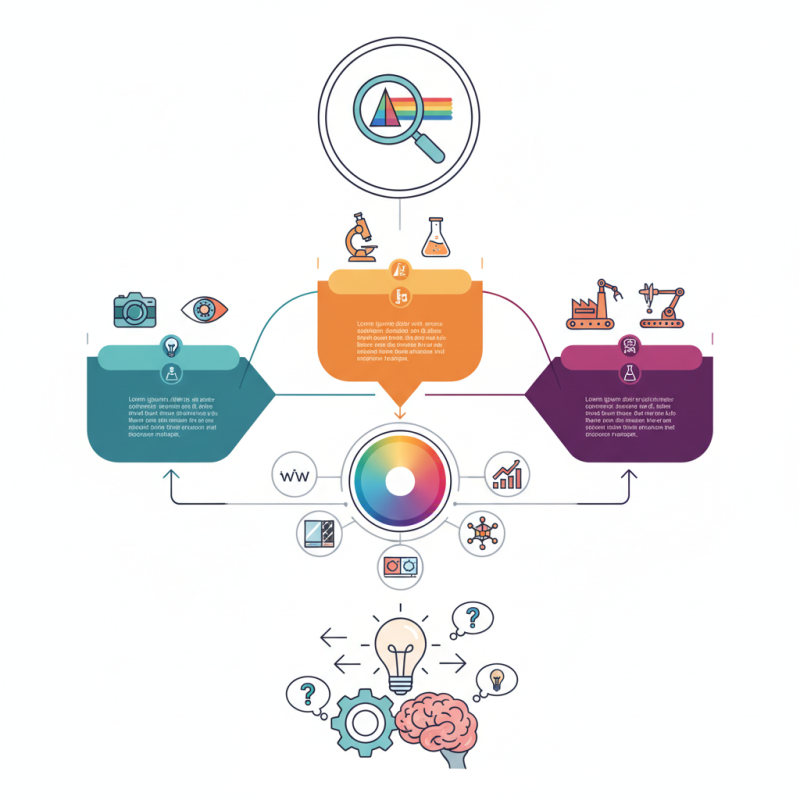
Optical filters are essential components in various applications, from photography to scientific research. They selectively transmit certain wavelengths of light while blocking others. Understanding their basics is crucial for anyone looking to use or integrate optical filters into their work. Filters can be categorized mainly into absorption and interference types. Absorption filters work by absorbing certain wavelengths, while interference filters use thin films to achieve selective transmission.
Choosing the right filter requires knowledge of the required light spectrum. For example, if you need to enhance colors, a color filter would be suitable. Conversely, if you need to block unwanted wavelengths, a neutral density filter is a better option. Consider potential challenges when selecting a filter; sometimes, the desired effect may not be achievable with standard filters. Experimenting with different options can lead to unexpected results that fuel creativity.
It’s important to reflect on your needs before making a decision. Different scenarios demand specific filter types. Ignoring this can lead to subpar results or failed experiments. Don’t hesitate to seek advice from professionals or consult detailed resources to ensure you’re making informed choices.
Types of Optical Filters: Absorptive, Reflective, and Interference
Choosing the right optical filter involves understanding the different types available: absorptive, reflective, and interference filters. Each type serves unique functions and applications, shaping light in diverse ways. Absorptive filters selectively absorb specific wavelengths, while allowing others to pass. According to industry research, these filters are often used for color correction in photography and enhancing contrast in imaging.
Reflective filters, on the other hand, use thin films to reflect unwanted wavelengths. They can exhibit high efficiency, particularly in the near-infrared spectrum. A study from the Optical Society indicates that reflective filters can achieve over 99% rejection for certain wavelengths, making them ideal for laser applications.
Interference filters utilize multiple layers to constructively and destructively interfere with light. They are essential in applications requiring narrow bandwidths, like fluorescence microscopy. A report by the International Journal of Optics notes that interference filters can feature a full width at half maximum (FWHM) of less than 10 nm, but they require precise alignment and can be sensitive to environmental changes. Selecting the appropriate filter is critical, as each type has specific use cases and performance characteristics that can greatly influence outcomes in optical applications.
Key Factors to Consider When Choosing Optical Filters
When selecting optical filters, several key factors come into play. Understanding your specific application is crucial. Various studies have shown that a significant percentage, up to 70%, of filter performance depends on proper application alignment. For instance, the spectral range is vital. Different applications may require filters that operate from UV to IR ranges. A deep understanding of wavelength requirements helps ensure optimal performance.
Another essential factor is the transmission and blocking capabilities of the filters. Reports indicate that filters with higher optical density can significantly reduce unwanted light. Proper choice can improve signal clarity by over 50% in many scenarios. Many overlook the importance of the filter's material. Glass filters can offer durability but may introduce unwanted absorption in certain wavelengths. Plastic filters, while lightweight, sometimes degrade with exposure.
Lastly, cost-effectiveness cannot be ignored. Budget constraints often lead to compromises. Yet, investing in quality filters pays off in efficiency and lifespan. Many users fail to consider the long-term effects of cheaper options, which might lead to increased replacement costs. Balancing quality and budget is a common challenge in selecting the right optical filter.
Applications of Optical Filters in Different Industries
Optical filters play a vital role across various industries. In healthcare, they are crucial in medical imaging. Reports indicate that the global medical imaging market is expected to reach $43 billion by 2027. This growth emphasizes the demand for precision in diagnostics. Optical filters enhance image quality by eliminating unwanted wavelengths. The result is clearer, more accurate imaging for better patient outcomes.
In the telecommunications sector, optical filters support fiber optic technology. High-performance filters ensure signal integrity, especially in dense wavelength division multiplexing. A study by MarketsandMarkets states that the fiber optic market will grow from $8.2 billion in 2021 to over $17 billion in 2026. This surge indicates the necessity for reliable optical filtering components in transmitting data efficiently.
The automotive industry also benefits from optical filters. They are used in advanced driver-assistance systems to ensure safety. According to a report by Allied Market Research, the automotive optics market could reach $27 billion by 2025. Such figures illustrate the growing reliance on technology. However, challenges in adapting to rapidly changing standards remain a concern. The demand for optical filters is clear, but companies must navigate these complexities to keep pace.
Maintenance and Care Tips for Optical Filters
Maintaining optical filters requires diligence and knowledge. Regular cleaning is essential to ensure optimal performance. Use a microfiber cloth and a lens cleaning solution designed for optical equipment. Avoid harsh chemicals that can degrade filter materials. Studies indicate that improper cleaning can reduce filter lifespan by up to 30%.
Storing filters correctly is crucial. Utilize protective cases to prevent scratches and dust accumulation. Excessive exposure to moisture can lead to mold growth. A relative humidity level below 60% is recommended for storage areas. Additionally, periodic inspections will help identify any signs of wear or damage early.
When using filters, ensure they are compatible with your optical system. Mismatched filters can lead to subpar imaging results. Check the specifications of both the filter and system regularly. This awareness informs maintenance practices and prolongs equipment reliability. Remember, the right care today can enhance performance tomorrow.

