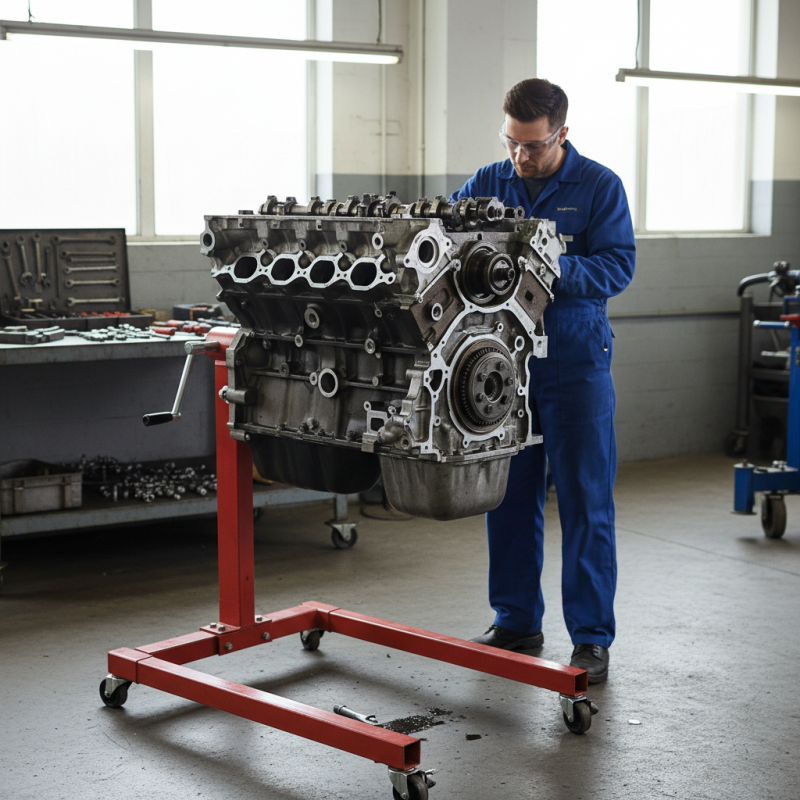
What is a Car Engine Stand and How Does It Work?
A car engine stand is a vital tool for mechanics and enthusiasts alike. It provides a stable platform for engine repairs and maintenance. When working on an engine, stability is crucial. A sturdy stand allows for easier access to various components. This makes tasks more manageable and less frustrating.
Using a car engine stand can save time and reduce strain. It lifts the engine off the ground, preventing awkward bending. This tool is particularly useful for heavy engines. An unsupported engine can be hazardous and challenging to control.
Many people underestimate the importance of a good stand. Choosing the right one can feel overwhelming. The market offers various types, each with different benefits. Evaluating your needs is essential. Don't let poor choices lead to accidents. Prioritize safety and efficiency with a reliable car engine stand.
What is a Car Engine Stand?
A car engine stand is a vital tool for anyone working on engines. It provides a stable platform for engine maintenance and repairs. These stands can support a fully assembled engine with ease. They allow mechanics to rotate, tilt, and move the engine without risking injury or damage.
When using an engine stand, ensure it is securely bolted to the engine. This detail is crucial; a poorly secured engine can fall. The ability to work at various angles is beneficial. It allows better access to different parts of the engine. However, not all stands are created equal. Some may feel wobbly or unstable. It is essential to assess the quality of the stand before use.
As you work, remember to take precautions. Keep your workspace organized. Tools and parts should be easily reachable. Don’t forget to clean the engine before placing it on the stand. This prevents dirt from entering components. All these steps enhance efficiency during engine work. Using an engine stand improves safety and comfort, but attention to detail is key.
What is a Car Engine Stand and How Does It Work?
| Feature | Description |
| Purpose | To securely hold a car engine during maintenance or rebuilding. |
| Construction Material | Typically made from steel or heavy-duty materials for durability. |
| Load Capacity | Ranges from 500 to 2,000 lbs depending on the model. |
| Height Adjustment | Most stands allow for height adjustment to suit different engine sizes. |
| Mobility | Many engine stands are equipped with wheels for easy movement. |
| Safety Features | May include locking wheels and safety clips to prevent accidental tipping. |
| Common Use Cases | Ideal for engine rebuilds, repairs, or replacements in automotive workshops. |
Components of a Car Engine Stand
A car engine stand is essential for automotive repair and maintenance. It holds the engine securely while allowing easy access to all components. Understanding the components of an engine stand can help users appreciate its value.
The base frame is typically made of steel or aluminum, providing stability. A strong, durable base can support engines weighing over 600 pounds. Mounting plates are crucial too; they secure the engine in place. Some stands offer adjustable mounting plates to fit various engine types. This flexibility allows mechanics to work efficiently without the worry of balance.
Another vital component is the swivel casters. These wheels enable smooth movement across the shop floor. Most casters lock in place, ensuring stability during repairs. The height adjustment feature is often overlooked but very necessary. This allows users to customize their working height, reducing strain during long sessions. Reports show that ergonomic tools improve the mechanic's efficiency by up to 21%. However, too often, users mismatch their engine stands with their specific engine types, a common oversight that can lead to accidents or damages.
How to Use a Car Engine Stand Effectively
Using a car engine stand can simplify engine repairs. Proper setup is crucial for safety and efficiency. Start by positioning the stand on a flat surface. Make sure it's stable before lifting the engine. Secure the engine with bolts, ensuring it’s tight. This prevents any accidents while you work.
When using the stand, check your angles. Sometimes, the engine may tilt unexpectedly. Adjust the position if needed, so you have better access to all components. Remember, safety goggles and gloves are essential. They protect you from flying debris and sharp edges.
Take breaks often. It’s easy to become frustrated if things don't go smoothly. If a part seems stuck, don’t force it. Take time to rethink your approach. This can save you from making unnecessary mistakes. Working on an engine can be a learning experience. Be patient with yourself as you improve your skills.
Engine Stand Usage and Effectiveness
Benefits of Using a Car Engine Stand
A car engine stand is a valuable tool for mechanics and car enthusiasts. It allows users to securely hold an engine while conducting repairs or maintenance. One of the main benefits of using a car engine stand is enhanced accessibility. According to industry reports, over 70% of mechanics find that engine stands make it easier to work on engines. This can improve efficiency and reduce the risk of injuries.
Using an engine stand also provides stability during repairs. Many stands can hold up to 1,000 pounds safely. This capability helps prevent accidents, such as dropping the engine. However, some users may overlook the weight limits of their equipment, leading to potential hazards. It’s important to always check specifications before use.
Moreover, a car engine stand allows for better organization of components. When engines are removed, there are numerous parts to handle. Organizing these parts becomes easier when the engine is secured on a stand. However, some mechanics neglect to label parts correctly, which can lead to confusion. Effective organization saves time and ensures that no components are lost during the rebuild process.
Safety Tips When Using a Car Engine Stand
When using a car engine stand, safety should always come first. Engine stands can support heavy loads, often up to 1,500 pounds. Reports indicate that improper use results in numerous accidents annually. A simple mistake can lead to severe injuries.
Before starting, inspect the engine stand thoroughly. Ensure all components are intact and secured. Small cracks or rust can weaken the structure. The risk of collapsing increases significantly in these cases. Fastening the engine correctly is crucial. Utilize bolts and clamps specifically designed for the task. Loose fittings are a common error.
While working, maintain a clear workspace. A crowded area increases the chance of accidents. Only have essential tools nearby. Never work alone; a buddy system is advisable. In case of a mishap, immediate assistance will minimize risks. Remember to wear personal protective equipment. Safety glasses and gloves can protect against sharp edges and debris. These precautions might seem tedious, but they are essential. Always ask: is this setup secure? Reflect on potential hazards before diving into the task.