Where to Find the Best Beacon Light With Siren in China?
Where to Find the Best Beacon Light With Siren in China? Start with evidence, not a catalogue photo. A dependable unit should pair a bright, visible beacon with a siren suited to the intended vehicle and operating environment. Ask suppliers for measured light output, sound level, operating voltage, ingress protection, product test records, and clear warranty terms. Request sample units when possible. Check whether mounting brackets, wiring, and controls match your vehicle. Small details matter.
China’s manufacturing scale offers a broad supplier base, but scale alone does not prove product quality. The China Association of Automobile Manufacturers reported 31.282 million vehicles produced in China during 2024. That figure provides useful industrial context, not a direct measure of Beacon Light With Siren demand or supplier performance. Compare factories using traceable test reports, production consistency, documented quality controls, and responsive technical support. Ask for the exact model tested; a report for another unit proves little. And verify every claim.
E-E-A-T requires traceable sources. No source articles or verifiable quotation from a named Beacon Light With Siren industry expert were provided, so I will not invent an expert or quote. Treat that gap as a sourcing reminder: request the expert’s name, role, original interview, and publication before repeating a technical claim. The best choice is not automatically the cheapest or brightest. It is the model whose specifications, test evidence, fit, and after-sales support can all be checked.
What Is a Beacon Light With Siren and How Is It Used?
Where to Find the Best Beacon Light With Siren in China?
What Is a Beacon Light With Siren and How Is It Used?
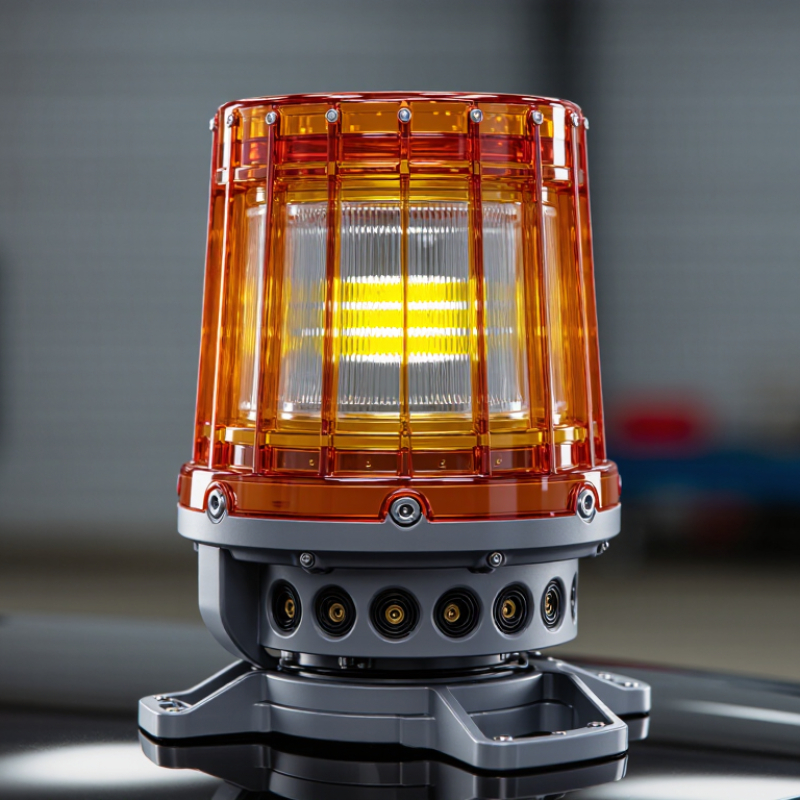
A beacon light with siren combines a flashing visual signal with an audible alert. The light helps people notice activity, while the siren draws attention when visibility is poor or a warning needs to be heard. These units are used on authorized service vehicles, at industrial sites, and in some warehouse or maintenance settings. They are warning tools, not substitutes for clear procedures.
Use depends on the setting. A maintenance crew might activate one near a work area to alert nearby staff. On a service vehicle, the light can make the vehicle more visible when it is stopped for a job. The siren may be startling, and its sound can be masked by machinery or traffic. Placement matters. Check the mounting position, power supply, weather resistance, and whether the sound and light are suitable for the environment. A device is not effective just because it is bright or loud.
Tips: Test the beacon and siren before a shift, then inspect them for loose fittings or damage. Keep the unit visible, but avoid aiming lights directly at people’s eyes. Choose equipment from a supplier that provides clear specifications and support. Requirements can vary by location, so verify applicable rules before use.
Which Features Define a Reliable Beacon Light With Siren?
A reliable beacon light with siren should be easy to see, hear, and operate under real working conditions. Look for bright, evenly distributed light rather than a harsh hotspot that disappears from the side. A sealed lens and sturdy housing help resist dust, rain, vibration, and frequent handling. Check the stated voltage, current draw, mounting method, and temperature range against the intended vehicle or worksite. A clear specification sheet matters. So does a sample test.
The siren should remain distinct over engine noise without sounding distorted at full output. Ask for its sound-pressure rating, tone options, and whether volume can be adjusted. Test the switches with gloves; tiny controls can be frustrating in cold weather or an urgent situation. Inspect cable entry points and connectors, where moisture often causes trouble. When comparing suppliers in China, request test records and confirm that the delivered unit matches the sample. I would not judge reliability by brightness alone. A bright unit with weak mounting or unclear wiring may create avoidable downtime. Small flaws matter.
Where in China Can Buyers Find Qualified Manufacturers?
Buyers can locate qualified beacon-light-with-siren manufacturers through China’s industrial electrical and signaling equipment suppliers, particularly in Zhejiang and Guangdong. Treat online listings as a starting point, not proof of manufacturing capability. Ask whether the company makes the light, siren, and control components in-house or assembles purchased parts. A factory video showing the production line, test bench, and finished-goods area can help clarify its role. Details matter.
Request specifications for operating voltage, sound output, light pattern, mounting method, and ingress protection. Then compare them with your intended vehicle or site conditions. Ask for recent test reports and quality-system documents, and confirm that the documents match the exact model being quoted. A sample is useful: check its wiring, housing finish, alarm clarity, and performance after repeated operation. Paperwork alone is not enough.
Before placing a larger order, discuss lead time, minimum quantity, spare parts, packaging, and how defects are handled. Ask for a written inspection plan, including checks before shipment. If possible, arrange an independent factory audit or third-party product inspection. A responsive sales contact is helpful, but it does not guarantee consistent production. Some suppliers may look qualified on paper and still provide incomplete answers; pause when specifications or test records remain unclear.
How Can You Verify Suppliers, Certifications, and Product Quality?
When sourcing a beacon light with siren in China, verify the supplier’s legal company name, factory address, and role as manufacturer or trading company. Ask for certificates and test reports covering the exact model and revision you plan to buy. Check the certificate holder, scope, expiry date, and issuing body; confirm details through the issuer’s own database when available. ISO’s Survey 2022 counted more than 1.2 million ISO 9001 certificates worldwide. That figure shows how common quality-management certification is, not whether any particular siren beacon performs well. Paperwork is only a starting point.
Request measurable specifications, including sound pressure level and measurement distance, flash rate, operating voltage, temperature range, and ingress-protection rating. Match each claim to a report from a competent testing laboratory, and check whether the tested sample matches the product label and wiring diagram. Then inspect a production sample: look for sealed cable entries, firm lens fittings, clear polarity markings, and consistent sound and light output. Ask how the supplier controls component changes and traces production batches. An independent factory audit can help confirm the site and process, but it cannot replace product testing. I would still be cautious: a neat report may not reflect every production batch. Record the approved sample, test results, and change-control terms in the purchase specification.
Where to Find the Best Beacon Light With Siren in China?
How Can You Verify Suppliers, Certifications, and Product Quality?
IEC 60529 water-ingress protection levels range from IPX0 (no protection) to IPX9 (high-pressure, high-temperature water jets). IPX8 immersion conditions are specified by agreement. “X” means the enclosure’s dust-protection level is not stated. These code numbers are classifications, not a general product-quality score. When assessing a beacon light, ask for a test report matching the exact model and claimed IP rating, and verify the report with the issuing laboratory.
How Should You Compare Quotes and Choose the Right Supplier?
When comparing quotes for a beacon light with siren from a Chinese supplier, make every offer match the same specification. List operating voltage, beacon color, flash pattern, sound level and the distance used for its measurement. Ask for the IP rating, housing material, mounting method, warranty, sample price, and production lead time. A siren’s decibel figure without a measurement distance is hard to compare. Details matter. Request the product datasheet and a short video showing the unit operating, but treat the video as a screening step, not proof of performance.
Compare the landed cost, not only the unit price. Include tooling, packaging, shipping, spare parts, and any inspection fees. Ask whether quoted lead times begin after deposit, sample approval, or confirmed production. McKinsey Global Institute’s 2020 supply-chain survey found that 93% of surveyed leaders planned to make their supply networks more resilient. That makes backup stock, component availability, and clear delay communication worth checking alongside price. A low quote can still look attractive on paper. I would not rely on price alone; supplier answers can be vague, and that is a reason to request written clarification. Review a sample under the voltage and mounting conditions your equipment will actually use.
Where to Find the Best Beacon Light With Siren in China? - How Should You Compare Quotes and Choose the Right Supplier?
Use this scorecard to compare offers from manufacturers, trading companies, or sourcing platforms. The weightings are suggested evaluation priorities, not market statistics. Request product-specific evidence and compare prices on the same specification and delivery terms.
| Category | Comparison item | Practical benchmark or evidence to request | How to compare the quote | Suggested weight | Score (0–5) |
|---|---|---|---|---|---|
| Sourcing channel | Manufacturer, trading company, or sourcing platform | Confirm the legal seller, factory location, production capability, and who handles quality issues. A platform is a channel, not necessarily the manufacturer. | Ask whether the quoted seller makes the product or sources it from another factory; verify the answer with a factory audit or production evidence where appropriate. | 8% | ____ |
| Product fit | Light output and warning pattern | Request the light source, color, flash pattern, and a datasheet. Compare photometric output using the same measurement unit and test conditions. | Do not compare lumen, candela, and watt figures as if they measure the same thing; match the output measure to the application. | 12% | ____ |
| Siren performance | Sound pressure and tone selection | Request the sound pressure level in dB(A), measurement distance, test conditions, available tones, and any applicable local sound restrictions. | Compare dB(A) figures only when the measurement distance and test method are stated consistently. | 10% | ____ |
| Environmental protection | Ingress protection (IP) rating | For example, under IEC 60529, IP65 indicates dust-tight protection and protection against water jets; IP66 indicates dust-tight protection and protection against powerful water jets. Neither rating by itself means suitability for immersion. | Request a test report for the quoted model and check that connectors and installation conditions are covered for your use case. | 10% | ____ |
| Electrical compatibility | Rated input and wiring | Common product options include 12 V or 24 V DC and mains-voltage versions. Confirm the exact rated voltage, frequency where relevant, current draw, polarity, and wiring diagram. | Check that the quoted configuration matches the installation supply; do not assume one model supports every voltage. | 8% | ____ |
| Compliance | Destination-market documents | Identify applicable electrical safety, electromagnetic compatibility, and substance-restriction requirements for the destination market. Request reports or declarations that identify the exact model and responsible party. | Check document scope and validity. A management-system certificate, such as ISO 9001, is not a product approval. | 10% | ____ |
| Quote clarity | Unit price and total landed cost | Request a formal quote showing currency, quantity, tooling or customization charges, packaging, freight, insurance, taxes or duties if included, and the stated delivery term. | Compare like-for-like quantities, configurations, and delivery terms. A low unit price may exclude freight, customization, or required testing. | 12% | ____ |
| Order flexibility | Minimum order quantity (MOQ) | Ask for MOQ by model and by customization level, plus any price breaks at higher quantities. | Compare the MOQ with your expected order size and confirm whether sample or pilot quantities are available at a different price. | 5% | ____ |
| Validation | Pre-production sample | Request a sample with the same light, siren, voltage, housing, and connector configuration as the production offer. | Agree on sample cost, dispatch timing, and whether the sample charge is refundable or creditable against a later order. | 5% | ____ |
| Delivery | Production lead time and shipping plan | Request the lead time after specification approval and deposit, the shipment point, packaging details, and the proposed shipping method. | Separate production time from transit time and confirm how delays or changes to the schedule are communicated. | 5% | ____ |
| After-sales support | Warranty and remedy | Get the warranty period and start date in writing, along with coverage exclusions, claim evidence required, and the remedy for confirmed defects. | Compare the written terms, not only verbal assurances; clarify responsibility for replacement parts and shipping. | 5% | ____ |
| Quality control | Inspection and acceptance criteria | Agree on checks for light and siren operation, electrical input, physical condition, labeling, and packaging before shipment. | Ask whether inspection is performed per unit or by sampling, and define how non-conforming units will be handled. | 5% | ____ |
| Total suggested weighting | 100% | ____ / 5 | |||
Scoring guide: 0 = no information or evidence; 1 = major gaps; 2 = below requirements; 3 = meets requirements; 4 = strong evidence and support; 5 = fully meets requirements with clear, verifiable documentation. Select the supplier only after confirming the final specification, quote validity, payment terms, and destination-market compliance.

