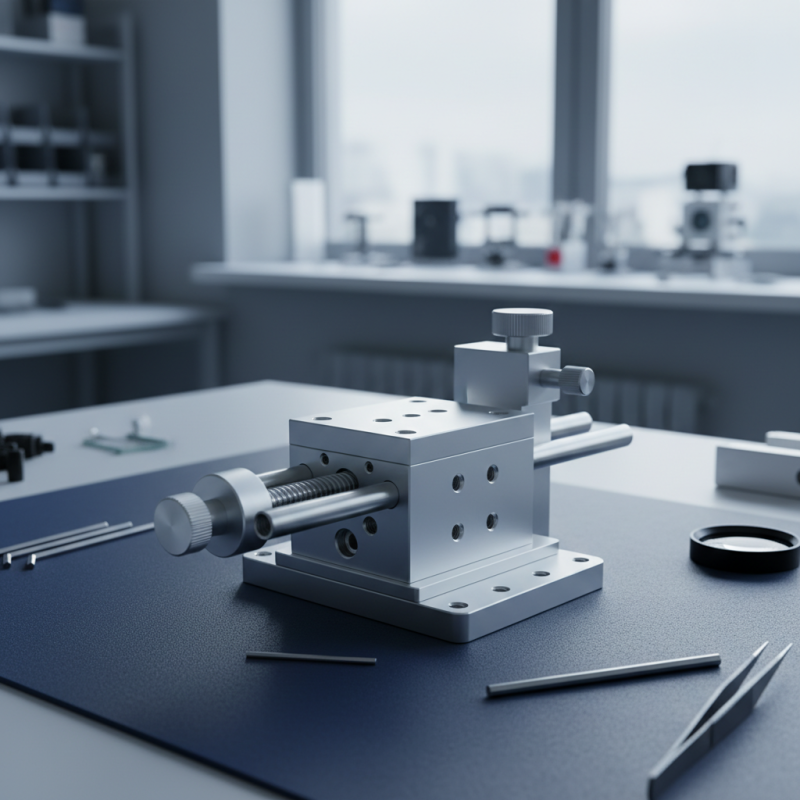
2026 Top Manual Linear Stage Features and Benefits to Know?
In a world driven by precision, the Manual Linear Stage stands out. These tools play a crucial role in various fields, from robotics to optics. Understanding their features helps in selecting the right equipment for your project.
Manual Linear Stages offer several benefits, including simplicity and cost-effectiveness. They are user-friendly, needing basic mechanical skills for operation. However, manual adjustments lack the precision of automated systems, leading to potential inconsistencies. Users must be prepared for trial and error during setup.
Despite their limitations, Manual Linear Stages are invaluable for applications requiring meticulous positioning. Their intuitive design allows for easy integration into existing systems. As you explore the top features of these stages, consider both their advantages and drawbacks. The balance of efficiency and control is essential in achieving optimal results.
Overview of Manual Linear Stages and Their Applications
Manual linear stages are fundamental tools in various testing and assembly applications. They allow for precise positioning and movement along a linear path. In labs and manufacturing environments, these stages are essential for tasks requiring accuracy. Micrometer adjustments enable users to control movements down to microns. This level of precision is crucial in fields like optics and materials testing.
Many users appreciate their simplicity and reliability. The design typically includes a flat base and a platform that slides. This straightforward build makes them easy to integrate into different setups. However, some stages may have limitations in speed or load capacity. It's important to evaluate specific project requirements before choosing a model.
Applications vary widely, from research to automotive assembly. In microscopy, they aid in sample positioning. In manufacturing, they streamline assembly processes. Despite their benefits, users often face challenges. Wear and tear can impact performance over time. Regular maintenance is crucial, yet often overlooked. Choosing the right stage can lead to enhanced efficiency, but it requires careful consideration.
Key Features of 2026 Manual Linear Stages
Manual linear stages are vital in various applications. In 2026, several key features enhance their effectiveness. Precision is essential, allowing for smooth and accurate movements. Users often focus on the stage's travel range. A larger range often accommodates more tasks and enhances flexibility.
Durability matters too. Stages must withstand regular use. Materials play a crucial role in ensuring longevity. Many designs include stainless steel or aluminum. These materials resist wear, but are they always the best choice? Operators sometimes overlook weight, affecting handling.
Another feature is adjustability. Fine-tuning is necessary for optimal performance. Some stages offer easy adjustment mechanisms, which can be beneficial. However, complexity in design might complicate usage for some. Users need to consider their specific requirements. Ultimately, choosing the right manual linear stage involves weighing these various benefits and challenges.
Advantages of Manual Linear Stages in Precision Handling
Manual linear stages play a crucial role in precision handling across various industries. These devices allow for controlled movements along a single axis. Their designs ensure fine adjustments, which are essential in applications like optics, robotics, and manufacturing. According to industry reports, more than 45% of firms using linear stages noted increased accuracy and efficiency in their operations.
One major advantage of manual linear stages is their simplicity. Operators can easily adjust positions without complex programming. This user-friendly nature significantly reduces setup times. In fact, a survey revealed that companies reported a 30% reduction in process errors when using manual systems. However, it’s important to consider the balance between ease of use and precision. Manual adjustments can sometimes introduce variability, which might not be acceptable in high-stakes environments.
Furthermore, the cost-effectiveness of manual linear stages cannot be overlooked. They are often less expensive than automated counterparts. While the initial savings are appealing, organizations might need to reevaluate their long-term goals. Relying solely on manual stages could lead to inefficiencies as demands for speed and precision increase. These considerations highlight the need for a thoughtful approach when integrating manual linear stages into modern workflows.
2026 Top Manual Linear Stage Features and Benefits to Know
| Feature | Description | Benefits |
| High Precision | Designed for accurate positioning with a resolution down to microns. | Ensures accurate part placement in testing and assembly processes. |
| Robust Construction | Made from durable materials to withstand harsh environments. | Increases lifespan and reduces maintenance costs. |
| User-Friendly Operation | Easy to use manual controls for precise movement. | Reduces training time and improves workflow efficiency. |
| Compact Design | Space-saving dimensions suitable for tight spaces. | Maximizes workspace and enables versatility in installations. |
| Customization Options | Available in various configurations to meet specific needs. | Provides tailored solutions that enhance operational capabilities. |
Comparison with Automated Linear Stages
When comparing manual linear stages to automated ones, several key factors arise. Manual stages provide resilience against power outages. They often don’t require complex software, making them reliable choices. For certain applications, simplicity is preferable. This makes manual stages easier to troubleshoot. While they may lack the speed of automation, they offer precision in positions.
Automated linear stages excel in speed and efficiency. According to a 2022 industry report, automated systems can increase throughput by 30%. They are essential for high-volume production. However, there’s a trade-off. The initial investment is higher for automation. Users must consider ongoing maintenance costs too. Complex systems can also require specialized training.
**Tip:** Evaluate the scale of your operations before choosing a stage type.
For delicate tasks, manual stages can be beneficial, allowing for tactile feedback and adjustments. Some users may feel overwhelmed by automated systems. They may miss minor details during high-speed processes. Reflecting on whether speed outweighs precision is crucial.
**Tip:** Take time to assess your specific application needs.
Comparison of Manual and Automated Linear Stage Features
Future Trends in Manual Linear Stage Technology
The future of manual linear stage technology is promising. Industry reports suggest that the global market for precision motion systems will reach $3 billion by 2026. User interest in precise, adjustable equipment is increasing. Many industries rely on manual linear stages for their reliability and cost-effectiveness.
Innovations like lightweight materials and enhanced ergonomics are emerging. These changes improve user experiences. However, there are challenges. Not all manufacturers adopt these advancements. Some still prioritize cost over quality, risking precision in applications. The balance between affordability and performance remains a point of contention in the market.
Future trends indicate a shift toward smart features. Integrating sensors to provide real-time feedback is becoming more common. Yet, this evolution requires investment. Many companies lack the resources to modernize. Thus, they may fall behind in the competitive landscape. Adapting to these changes will be essential for growth in the manual linear stage sector.